
Bench Storage and Bench Footprint Guide for Garage Gyms
The bench is not only its listed size. You need space to roll it, angle it, store it, and pull it into the rack without bumping everything else.
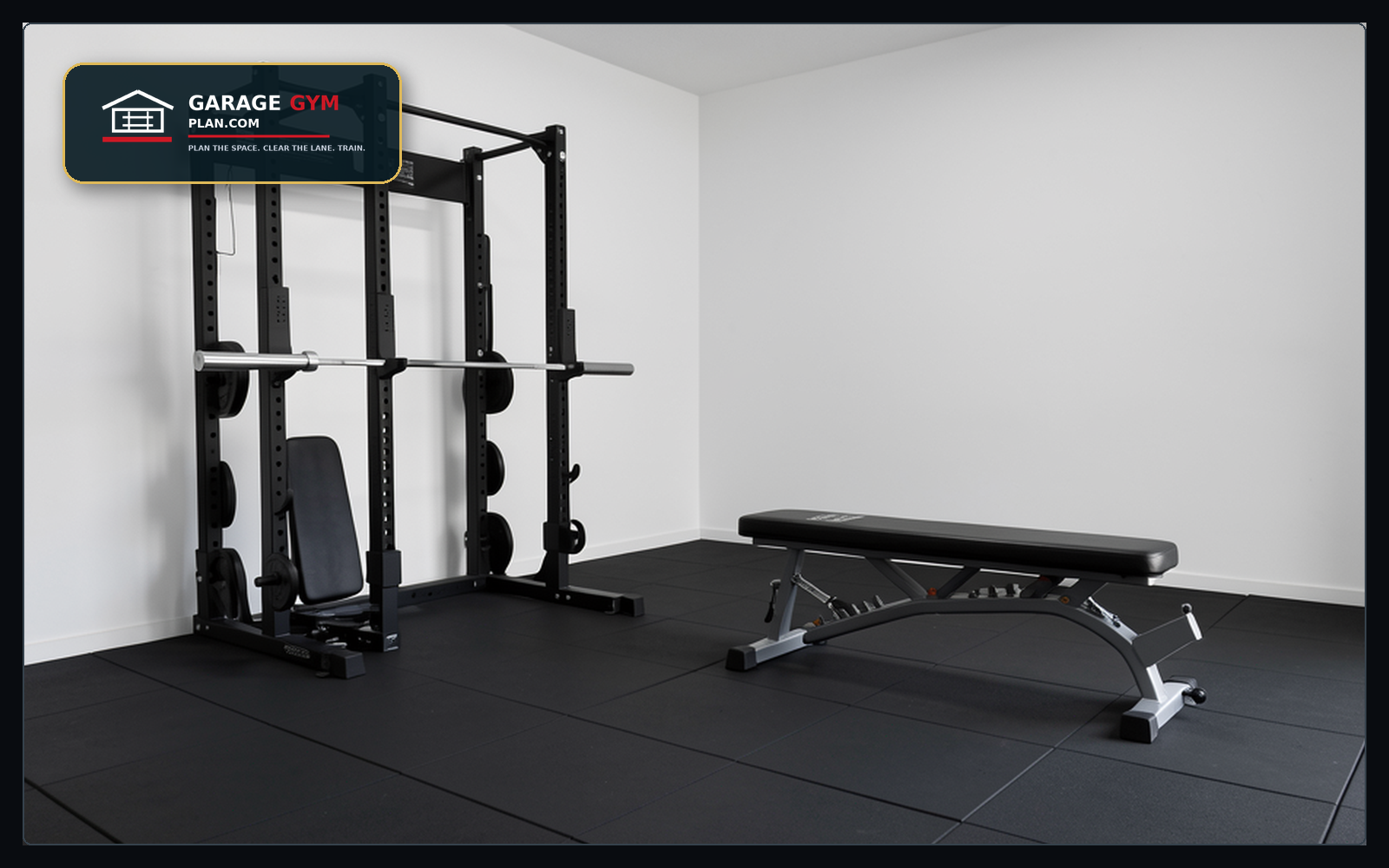
Use this guide if
- Your bench blocks the lane after workouts
- You are choosing between flat, adjustable, folding, or vertical-storage benches
- You need bench setup to work inside a rack or half-garage lane
The planning sequence
- Step 1: Measure the bench stored, moved, and set up inside the rack
- Step 2: Check whether vertical storage keeps the bench stable and out of the walking lane
- Step 3: Leave hand room around wheels, handles, and ladder adjustments
- Step 4: Store the bench close enough that setup does not become a workout barrier
- Step 5: Protect the path between bench storage and rack uprights
Common mistakes to avoid
- Buying by bench length only
- Ignoring the pullout path from wall to rack
- Storing the bench where a car door or plate tree blocks it
Bench footprint decision guide
A bench needs two footprints: the workout footprint when it is flat in the rack or dumbbell lane, and the parking footprint when the garage returns to normal.
| Bench/storage choice | Best fit | Measure before buying |
|---|---|---|
| Flat bench | Simple rack work where the bench can live beside the rack or under a shelf. | Flat length, handle clearance, and whether it can slide without scraping plates or mats. |
| Adjustable bench with wheels | Shared garages where the bench moves between rack, dumbbell, and storage positions. | Upright height, wheel path, pad width, and the turn radius around the rack feet. |
| Vertical-storage bench | One-car or half-garage setups that need the floor back after training. | Tip stability, stored depth from wall, ceiling clearance, and whether the upright spot blocks hooks or shelves. |
| Wall-hung bench | Rare cases where wall structure is known and the bench is designed for hanging. | Mounting instructions, stud/blocking location, lift height, and whether hanging the bench creates a head-level obstacle. |
- Mark the bench on the floor with tape in both use and storage positions.
- Leave hand clearance at the head and foot so moving the bench is a one-person habit.
- Do not buy a larger adjustable bench unless it still clears the bar path, dumbbell pickup zone, and car door.
Garage Gym Reset Kit
Measure the garage, choose the storage path, and turn the plan into a printable checklist before buying more equipment.
See the Garage Gym Reset KitTrust check for this decision
The safest choice is the one that fits your measured room and the manufacturer’s current installation requirements. Do not rely on a category name alone. Match the product dimensions to your rack zone, wall structure, walking lane, and storage reset routine.
Before checkout, compare the product page against your garage notes: clearance, mounting surface, weight capacity language, included hardware, delivery weight, and return window. If any of those details are unclear, choose the more conservative option or keep planning with the Garage Gym Reset Kit.
Next pages to plan with this
Use these guides to connect the layout decision to measurement, storage, flooring, and buying order.
Bench footprint checks
Use these numbers as planning checks, not as live product claims. Final purchases should be verified against the current listing and manufacturer instructions.
- Measure stored and in-use: Measure the bench flat, inclined if adjustable, and in its stored position. Add the walking path around it, not just the product footprint.
- Wall/vertical caution: Only store benches upright if the design supports it and it cannot tip into a child, car, or doorway path.
- Buying check: Verify bench length, width, height, pad gap, wheel placement, upright storage support, and weight before buying.