
Garage Gym Ventilation, Humidity, and Rust Prevention Guide
Moisture changes how a garage gym feels, smells, and ages. Plan airflow and storage so bars, plates, mats, and shelves stay usable.
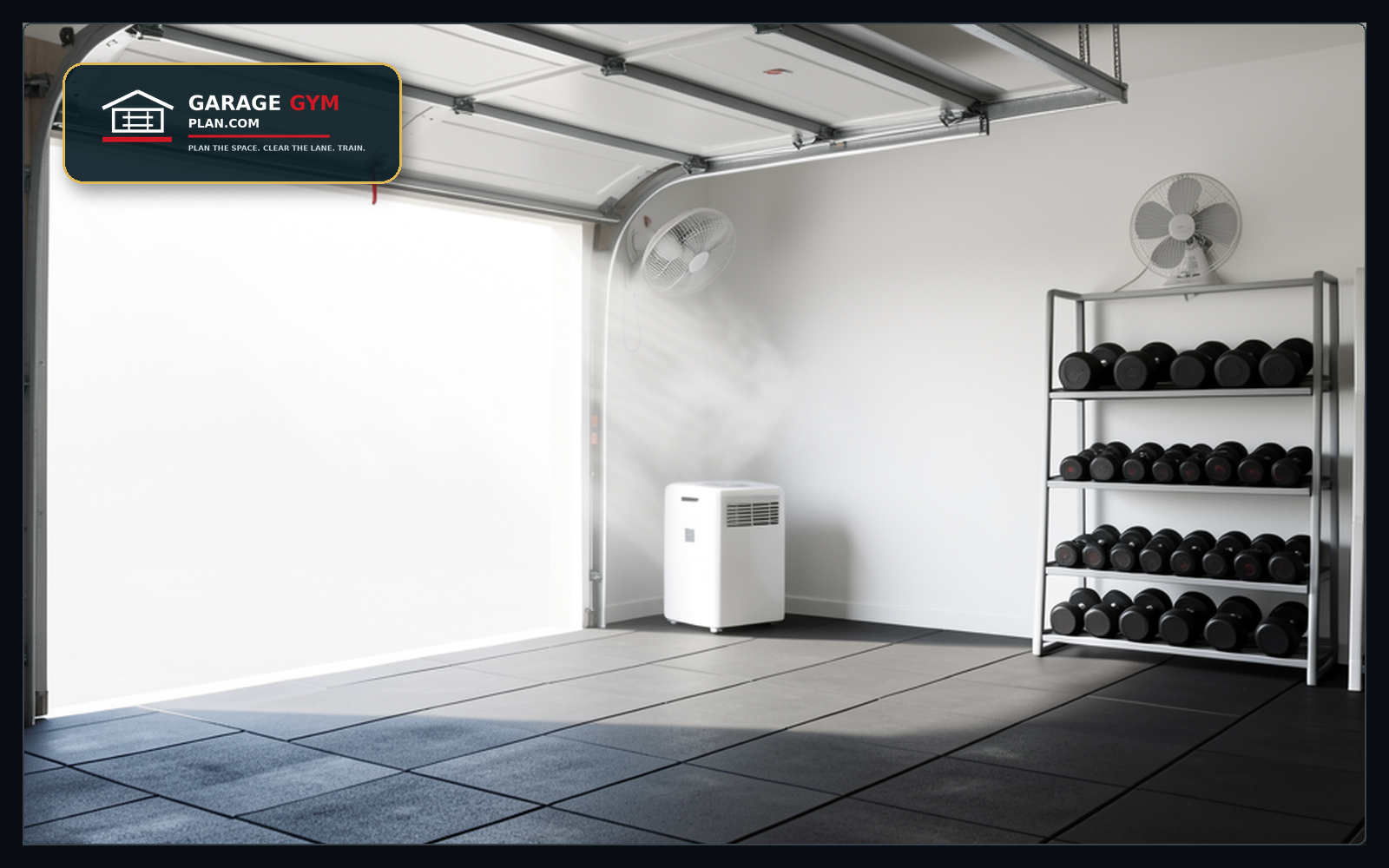
Use this guide if
- Your garage gets damp, hot, cold, dusty, or musty
- You store bars, plates, bands, and electronics near concrete or doors
- You want a simple maintenance routine that protects equipment
The planning sequence
- Step 1: Create airflow before workouts and after wet-weather parking
- Step 2: Keep bars and plates off bare concrete when possible
- Step 3: Separate sweaty accessories from closed bins until they dry
- Step 4: Use wall storage to keep gear visible and easier to wipe down
- Step 5: Check high-humidity corners before putting shelves or mats there permanently
Common mistakes to avoid
- Sealing damp gear in bins after every workout
- Storing bars where condensation or door drafts hit first
- Ignoring smell and airflow when installing large rubber areas
Next pages to plan with this
Use these guides to connect the layout decision to measurement, storage, flooring, and buying order.
Garage Gym Ventilation Humidity Rust: the practical planning layer
Use this section when the basic answer is not enough and you need to decide how the setup should work in a real garage. The goal is not to add more gear; it is to make the garage gym ventilation humidity rust choice fit the way you train, park, clean, and move through the space.
Gaps to solve before you buy or rearrange
- Specific types of smart dehumidifiers ideal for garage gym environments and their integration with ventilation.. Specific types of smart dehumidifiers ideal for garage gym environments and their integration with ventilation.
- A detailed cost-benefit analysis comparing various garage gym ventilation systems (e.g., exhaust fans, whole-house fans, smart vents).. A detailed cost-benefit analysis comparing various garage gym ventilation systems (e.g., exhaust fans, whole-house fans, smart vents).
- The impact of garage door seals and overall insulation on internal humidity levels and how to improve them.. The impact of garage door seals and overall insulation on internal humidity levels and how to improve them.
- DIY rust prevention coatings, waxes, and treatments for gym equipment, including application guides and recommended products.. DIY rust prevention coatings, waxes, and treatments for gym equipment, including application guides and recommended products.
- Seasonal humidity management strategies for garage gyms, adapting solutions for different climate conditions throughout the year.. Seasonal humidity management strategies for garage gyms, adapting solutions for different climate conditions throughout the year.
Choose this approach when
- Buy the piece that removes the biggest training bottleneck first, not the piece that looks best in a finished gym photo.
- Check footprint, storage, warranty, return rules, and replacement parts before ordering.
- A cheaper item is not cheaper if it forces a second purchase or blocks the main lift lane.
- You can explain where the item starts, where it goes during the workout, and where it returns afterward.
- The choice improves the main training lane instead of only making the room look more finished.
- The setup still works on a tired day when you are less careful about putting everything back perfectly.
Terms and fit checks to keep straight
These related ideas tend to appear around this topic. Use them as fit checks, not as a shopping list:
- Garage Gym: confirm that this detail applies to your garage, your equipment, and your training style before treating it as a must-have.
- Humidity Control: confirm that this detail applies to your garage, your equipment, and your training style before treating it as a must-have.
- Control Humidity: confirm that this detail applies to your garage, your equipment, and your training style before treating it as a must-have.
- Gym Equipment: confirm that this detail applies to your garage, your equipment, and your training style before treating it as a must-have.
- Prevent Rust: confirm that this detail applies to your garage, your equipment, and your training style before treating it as a must-have.
- Rust Prevention: confirm that this detail applies to your garage, your equipment, and your training style before treating it as a must-have.
- Moisture Condensation: confirm that this detail applies to your garage, your equipment, and your training style before treating it as a must-have.
- Condensation Forms: confirm that this detail applies to your garage, your equipment, and your training style before treating it as a must-have.
- Home Gym: confirm that this detail applies to your garage, your equipment, and your training style before treating it as a must-have.
- Poor Ventilation: confirm that this detail applies to your garage, your equipment, and your training style before treating it as a must-have.
Before-and-after layout check
- Measure the clear walking lane with the garage door open and closed.
- Mark the equipment footprint with painter tape, including the space needed to load, unload, and turn around.
- Stand where you will start the workout and make sure the first action is obvious.
- Put the heaviest or most awkward item back in its storage spot three times; if that feels clumsy, move the storage lower or closer.
- Check whether the setup still leaves a simple path for cleaning, parking, trash bins, bikes, or family gear.
- Take one photo from the garage entry and one photo from the rack area; if either view looks blocked, simplify before buying more.
When to keep it simple
Do not overbuild this page’s recommendation into a full-room remodel if the bottleneck is small. For many garage gyms, the right next move is one clear return spot, one better measurement, or one safer walking lane. Upgrade only after the current setup proves what is actually slowing down the workout.
For a deeper plan, pair this page with the garage gym measurement checklist, the layout cheat sheet, and the organization planner.
Pass 1 check: Check footprint, storage, warranty, return rules, and replacement parts before ordering. Walk through the setup as if the workout has already started: pick up the item, use it, return it, and then move to the next station. If that movement creates a trip point, a blocked car path, or a piece that never gets returned, the layout needs a smaller and clearer solution.
Pass 2 check: A cheaper item is not cheaper if it forces a second purchase or blocks the main lift lane. Walk through the setup as if the workout has already started: pick up the item, use it, return it, and then move to the next station. If that movement creates a trip point, a blocked car path, or a piece that never gets returned, the layout needs a smaller and clearer solution.
Pass 3 check: Buy the piece that removes the biggest training bottleneck first, not the piece that looks best in a finished gym photo. Walk through the setup as if the workout has already started: pick up the item, use it, return it, and then move to the next station. If that movement creates a trip point, a blocked car path, or a piece that never gets returned, the layout needs a smaller and clearer solution.
Pass 4 check: Check footprint, storage, warranty, return rules, and replacement parts before ordering. Walk through the setup as if the workout has already started: pick up the item, use it, return it, and then move to the next station. If that movement creates a trip point, a blocked car path, or a piece that never gets returned, the layout needs a smaller and clearer solution.
Pass 5 check: A cheaper item is not cheaper if it forces a second purchase or blocks the main lift lane. Walk through the setup as if the workout has already started: pick up the item, use it, return it, and then move to the next station. If that movement creates a trip point, a blocked car path, or a piece that never gets returned, the layout needs a smaller and clearer solution.
Pass 6 check: Buy the piece that removes the biggest training bottleneck first, not the piece that looks best in a finished gym photo. Walk through the setup as if the workout has already started: pick up the item, use it, return it, and then move to the next station. If that movement creates a trip point, a blocked car path, or a piece that never gets returned, the layout needs a smaller and clearer solution.
Pass 7 check: Check footprint, storage, warranty, return rules, and replacement parts before ordering. Walk through the setup as if the workout has already started: pick up the item, use it, return it, and then move to the next station. If that movement creates a trip point, a blocked car path, or a piece that never gets returned, the layout needs a smaller and clearer solution.
Pass 8 check: A cheaper item is not cheaper if it forces a second purchase or blocks the main lift lane. Walk through the setup as if the workout has already started: pick up the item, use it, return it, and then move to the next station. If that movement creates a trip point, a blocked car path, or a piece that never gets returned, the layout needs a smaller and clearer solution.
Pass 9 check: Buy the piece that removes the biggest training bottleneck first, not the piece that looks best in a finished gym photo. Walk through the setup as if the workout has already started: pick up the item, use it, return it, and then move to the next station. If that movement creates a trip point, a blocked car path, or a piece that never gets returned, the layout needs a smaller and clearer solution.
Pass 10 check: Check footprint, storage, warranty, return rules, and replacement parts before ordering. Walk through the setup as if the workout has already started: pick up the item, use it, return it, and then move to the next station. If that movement creates a trip point, a blocked car path, or a piece that never gets returned, the layout needs a smaller and clearer solution.
Pass 11 check: A cheaper item is not cheaper if it forces a second purchase or blocks the main lift lane. Walk through the setup as if the workout has already started: pick up the item, use it, return it, and then move to the next station. If that movement creates a trip point, a blocked car path, or a piece that never gets returned, the layout needs a smaller and clearer solution.
Pass 12 check: Buy the piece that removes the biggest training bottleneck first, not the piece that looks best in a finished gym photo. Walk through the setup as if the workout has already started: pick up the item, use it, return it, and then move to the next station. If that movement creates a trip point, a blocked car path, or a piece that never gets returned, the layout needs a smaller and clearer solution.
Pass 13 check: Check footprint, storage, warranty, return rules, and replacement parts before ordering. Walk through the setup as if the workout has already started: pick up the item, use it, return it, and then move to the next station. If that movement creates a trip point, a blocked car path, or a piece that never gets returned, the layout needs a smaller and clearer solution.
Pass 14 check: A cheaper item is not cheaper if it forces a second purchase or blocks the main lift lane. Walk through the setup as if the workout has already started: pick up the item, use it, return it, and then move to the next station. If that movement creates a trip point, a blocked car path, or a piece that never gets returned, the layout needs a smaller and clearer solution.
Pass 15 check: Buy the piece that removes the biggest training bottleneck first, not the piece that looks best in a finished gym photo. Walk through the setup as if the workout has already started: pick up the item, use it, return it, and then move to the next station. If that movement creates a trip point, a blocked car path, or a piece that never gets returned, the layout needs a smaller and clearer solution.
Pass 16 check: Check footprint, storage, warranty, return rules, and replacement parts before ordering. Walk through the setup as if the workout has already started: pick up the item, use it, return it, and then move to the next station. If that movement creates a trip point, a blocked car path, or a piece that never gets returned, the layout needs a smaller and clearer solution.
Pass 17 check: A cheaper item is not cheaper if it forces a second purchase or blocks the main lift lane. Walk through the setup as if the workout has already started: pick up the item, use it, return it, and then move to the next station. If that movement creates a trip point, a blocked car path, or a piece that never gets returned, the layout needs a smaller and clearer solution.
Pass 18 check: Buy the piece that removes the biggest training bottleneck first, not the piece that looks best in a finished gym photo. Walk through the setup as if the workout has already started: pick up the item, use it, return it, and then move to the next station. If that movement creates a trip point, a blocked car path, or a piece that never gets returned, the layout needs a smaller and clearer solution.
Pass 19 check: Check footprint, storage, warranty, return rules, and replacement parts before ordering. Walk through the setup as if the workout has already started: pick up the item, use it, return it, and then move to the next station. If that movement creates a trip point, a blocked car path, or a piece that never gets returned, the layout needs a smaller and clearer solution.
Garage Gym Reset Kit
Measure the garage, choose the storage path, and turn the plan into a printable checklist before buying more equipment.
See the Garage Gym Reset KitHumidity and rust evidence checks
Use these numbers as planning checks, not as live product claims. Final purchases should be verified against the current listing and manufacturer instructions.
- Measure it: Use a basic hygrometer before changing equipment. Track morning/evening humidity for a week, especially after rain, snow, or parking a wet car inside.
- Protect steel: Keep bars off damp floors, wipe sweat from knurling, and store accessories where air can move around them.
- Buying check: Before buying dehumidifiers or fans, verify room size coverage, drainage, noise, power draw, and whether the garage is insulated or leaky.