Garage Gym Wall Shelf Ideas: Bins, Accessories, Shoes, Towels, and Tools
Bottom line
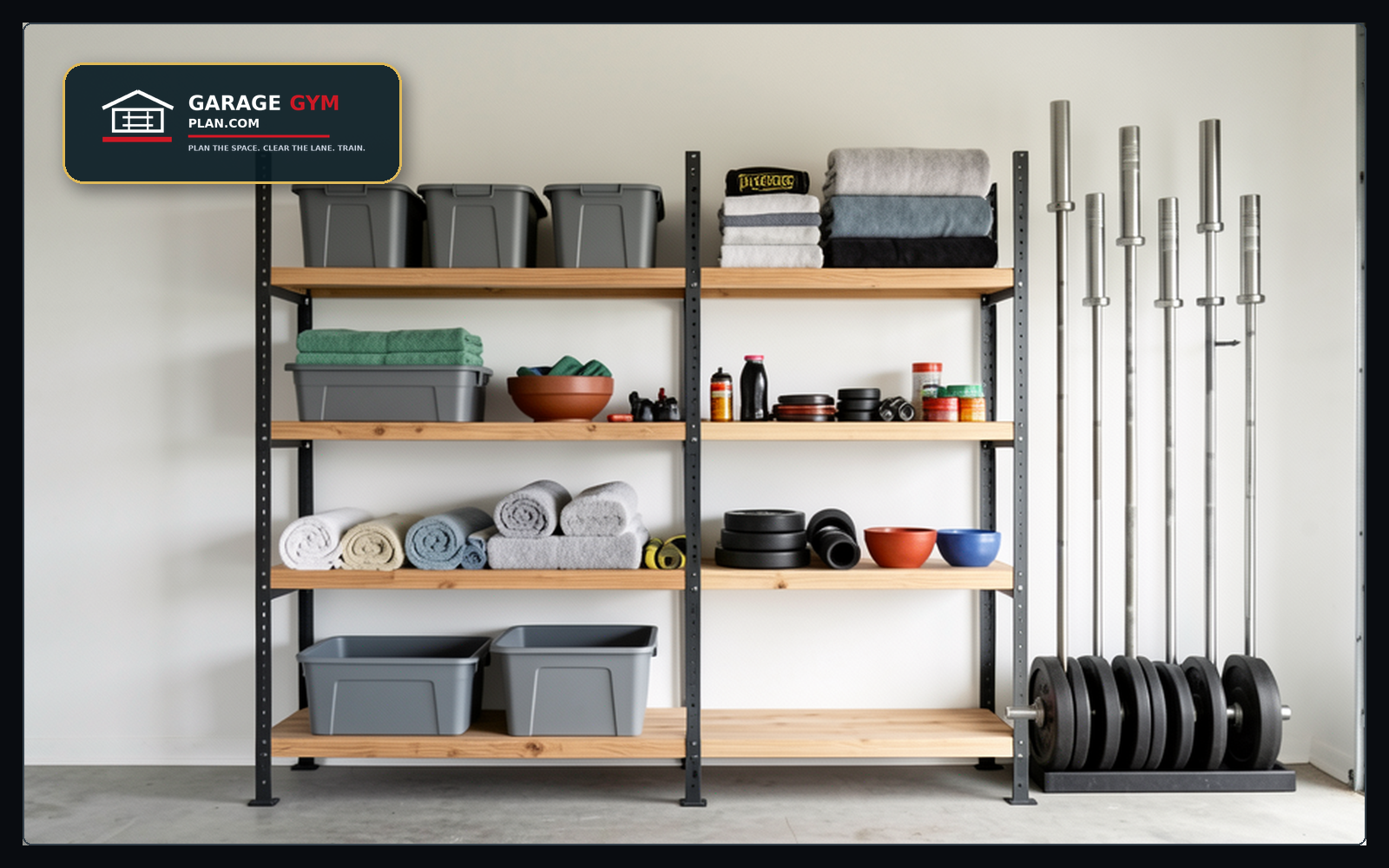
Use wall shelves for light accessories, towels, shoes, small bins, and cleaning supplies — not heavy plates or anything that should sit in the lifting lane or on a rated rack attachment.
Decision table
| Situation | Best move | Avoid |
|---|---|---|
| Small accessories, wraps, collars, towels | Shallow labeled shelves or clear bins | Deep shelves that hide items behind other gear |
| Heavy plates or kettlebells | Low storage, rack storage, or rated floor units | High wall shelves that create fall or anchor-load risk |
| Shared garage tools and gym supplies mix together | Separate shelves by zone and label one gym-only row | One catch-all shelf that becomes a junk drawer |
| Shoes, sprays, towels, and cleaning items | One light-duty shelf near the entrance/reset zone | Storing wet items above bars, benches, or electronics |
Wall shelves work best when they hold small repeat-use items without stealing bar path, walking space, or visual clarity.
Use this guide if
- Accessories and small items keep landing on the floor
- You need storage for towels, shoes, collars, straps, bands, sprays, and tools
- You want the garage to reset quickly after workouts
The planning sequence
- Step 1: Put daily-use items at eye or chest height
- Step 2: Keep heavy items lower unless the shelf and wall are made for the load
- Step 3: Use bins only when labels stay visible from the training lane
- Step 4: Keep shelves shallow near walking and plate-loading paths
- Step 5: Separate gym accessories from house tools when possible
Common mistakes to avoid
- Turning shelves into a junk wall beside the rack
- Putting small critical items in opaque bins with no labels
- Mounting shelves where plates or bars need swing room
Next pages to plan with this
Use these guides to connect the layout decision to measurement, storage, flooring, and buying order.
Quick shelf decision
Best move: use wall shelves for light-to-medium accessories after the floor lane is protected, not as a place to hide every awkward item.
| Storage need | Better first choice | Check before buying |
|---|---|---|
| Towels, bands, collars, shoes | Shallow shelves or labeled bins | Reach height and daily access |
| Heavy plates or kettlebells | Floor rack or purpose-built storage | Load rating and tip risk |
| Cleaning tools and garage items | Separate utility zone | Whether it blocks the training reset path |
| Mixed small accessories | Bins grouped by training type | Whether items are easy to return after a workout |
What belongs on garage gym wall shelves?
Wall shelves work best for items that are light enough to lift safely, used often enough to deserve visible storage, and awkward enough to become floor clutter when they do not have a home.
- Good shelf items: towels, collars, bands, wraps, chalk, shoes, cleaning supplies, small cable attachments, and labeled bins.
- Usually better elsewhere: heavy plates, loaded kettlebells, unstable dumbbells, sharp tools, and anything that could fall into the training lane.
- Shared-garage rule: keep household items and gym items in separate zones so a workout does not require moving paint cans, holiday bins, or car supplies.
Shelf placement rules that prevent clutter
The best wall shelf is not just the strongest shelf. It is the shelf you can reach, return to, and avoid during normal training. Before buying, mark the shelf depth with painter's tape and walk through one normal workout.
| Placement check | Why it matters |
|---|---|
| Above shoulder height | Better for light items, worse for daily heavy access |
| Near the rack or bench | Useful for collars, bands, wraps, and small accessories |
| Near the garage door track | Requires clearance checking before installing deep shelves |
| Beside the car path | Needs shallow depth so doors and mirrors do not hit storage |
If the shelf makes you step around gear, duck under bins, or move unrelated garage items before training, use a different wall or a lower-profile system.
Common shelf mistakes to avoid
- Using shelves as overflow storage: if every random item goes on the shelf, the training lane will get messy again.
- Ignoring depth: deep shelves can make a narrow garage feel tighter than a floor rack.
- Putting heavy items overhead: plates, kettlebells, and dense tools usually need lower storage with clear load ratings.
- Skipping labels: bins work only if the return path is obvious after a workout.
For most garage gyms, wall shelves are the second move after the lane is measured and the main equipment has a clear home. Use shelves to keep small accessories visible, not to postpone the bigger layout decision.
Measurement and buying sanity checks
Use these checks as planning help, not as live product claims.
- Measure first: Record the exact wall width, depth, ceiling height, car-door swing, walking lane, and reset location before buying storage.
- Verify product details: Check current price, dimensions, weight capacity, hardware, shipping, return policy, and manufacturer instructions on the live listing.
- Protect the lane: A product is a bad fit if it creates a toe-stub, blocks the car, hides daily gear, or requires moving unrelated items before training.