Power Rack Ceiling Height Guide for Garage Gyms and Low Ceilings
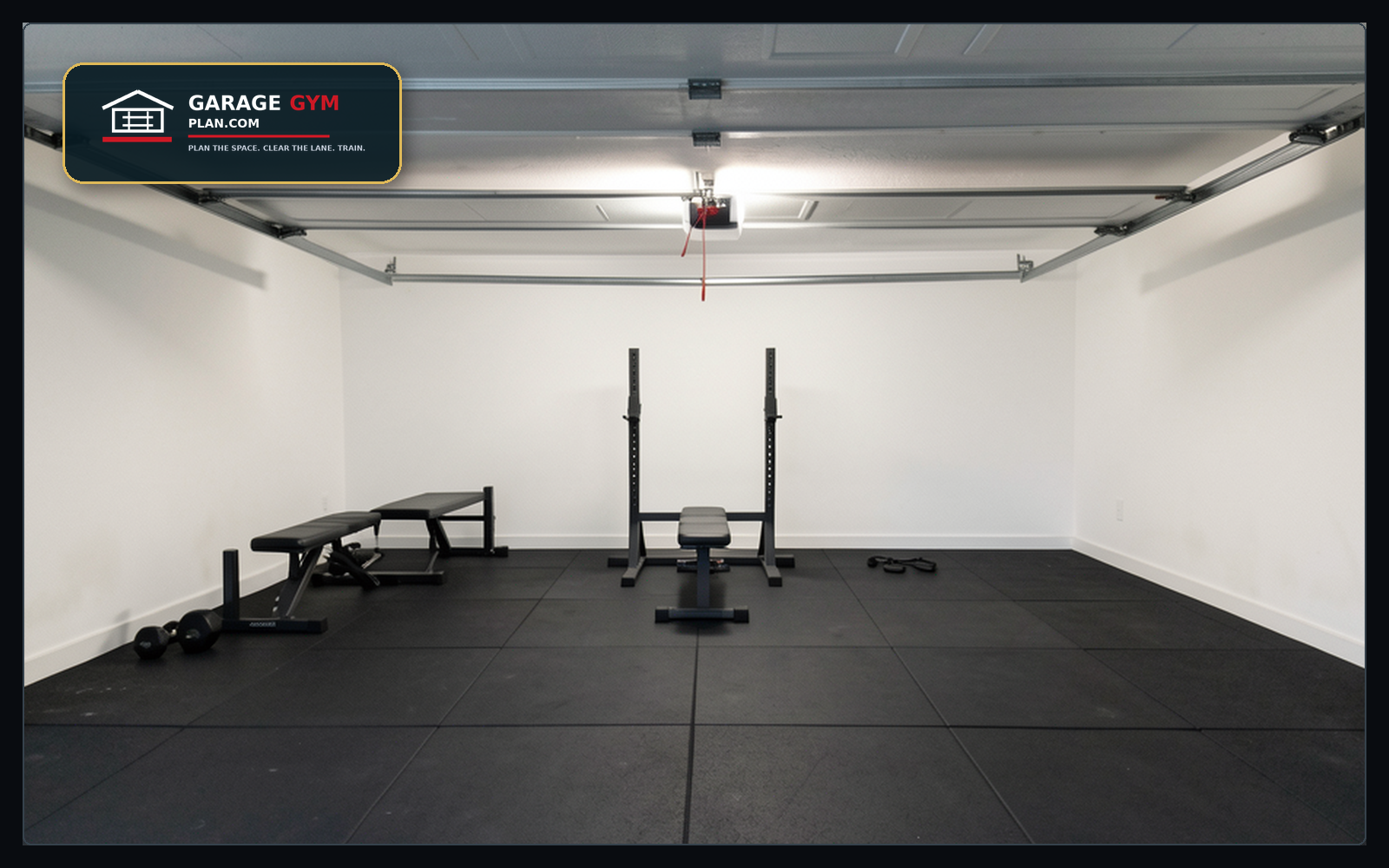
A power rack can fit on paper and still fail in a real garage. Ceiling height is only the first check.
Before buying, you need to test rack height, pull-up clearance, garage-door track clearance, platform height, barbell loading room, and walking space around the rack.
This guide turns rack fit into a pass/tight/redesign check so you can avoid buying a rack that dominates the room or blocks the garage.
Quick answer
Check the full installed height of the rack plus pull-up clearance, flooring or platform height, garage-door track path, barbell sleeve loading room, and walking lanes. If any of those fail, choose a shorter rack, folding rack, squat stand, half rack, or dumbbell-first layout.
Ceiling height is not the whole rack-fit answer
The listed rack height tells you only the rack frame dimension. Real use adds flooring thickness, platform height, pull-up movement, barbell loading space, and the garage door path.
A rack that clears the ceiling may still feel unusable if you cannot load plates, walk around the bench, or open the garage door normally.
Power rack fit checks
Measure the lowest ceiling point where the rack will stand.
Measure garage door tracks and opener rails with the door open and closed.
Add flooring, platform, or mat height to the rack location.
Check pull-up bar clearance if pull-ups or hanging accessories matter.
Measure full barbell width and side-loading room, not only the rack footprint.
Check bench path, plate storage, and walking lane around the rack.
When a shorter rack or folding rack makes sense
A shorter rack can solve overhead clearance, but it may compromise pull-up comfort or accessory placement.
A folding rack can protect parking space, but it still needs wall structure, folded projection clearance, bar storage, plates, bench parking, and open-rack workout space.
A squat stand or dumbbell-first setup can be smarter when the room is too tight for a full rack without constant setup friction.
PASS / TIGHT / REDESIGN rack score
PASS means the rack supports normal lifting, loading, storage, walking, and garage use.
TIGHT means the rack can work, but you should expect compromises such as bench shuffling, restricted pull-ups, or careful parking.
REDESIGN means the rack interferes with doors, tracks, utility access, car movement, or safe lifting space. Change the rack type or location before buying.
Buying sequence after the rack fit score
First, confirm the rack location and flooring height.
Second, choose rack height, depth, and style based on the measured constraints.
Third, place plates, bar storage, bench storage, and accessories on the same plan.
Last, add specialty attachments only after the basic rack setup works.
Rack-fit scorecard
| Question | PASS signal | REDESIGN signal | Compare |
|---|---|---|---|
| Does the rack clear the usable ceiling? | Frame plus flooring clears comfortably | Frame or pull-up bar conflicts with ceiling or tracks | View options |
| Can you load the bar safely? | Bar sleeves have clear side space | Shelves, walls, or car lane block loading | View options |
| Can the garage still function? | Door, car, storage, and walking paths remain usable | Rack blocks door track, car path, or utilities | View options |
| Can the bench and plates live nearby? | Bench and plates have defined storage spots | Workout starts by moving clutter every time | Plan first |
Rack height is only the first clearance
A rack can clear the ceiling and still fail in use. Add mat or platform height, pull-up movement, J-cup positions, barbell sleeve loading, safety arms, plate storage, and the garage-door path. The tightest of those measurements sets the real limit.
Measure from the finished training surface, not bare concrete, because mats and platforms can change a pass into a tight fit.
- Frame height: listed rack height plus flooring below it.
- Pull-up height: head clearance, knee bend, and ceiling or opener conflicts.
- Barbell width: room for plates and hands outside the uprights.
- Bench path: space to roll, angle, and store the bench.
- Garage function: door travel, opener rail, lights, and storage shelves.
Low-ceiling rack options
If a full-height power rack is too tall, compare shorter racks, half racks, squat stands, folding racks, and dumbbell-first layouts. Each option trades off stability, storage, attachments, pull-ups, and floor space.
A shorter rack is not automatically worse. In a garage with low rails or a parked car, a compact setup that stays usable may beat a taller rack that blocks movement.
- Short rack: good when height is the blocker but floor space is stable.
- Folding rack: good when parking space matters and wall mounting is realistic.
- Squat stand: good when portability matters and loads match the setup.
- Dumbbell-first: good when overhead and side-loading clearance are both tight.
Garage-door and opener conflicts
Check the rack location with the garage door open and closed. Tracks, opener rails, handles, and raised panels can cross the space above or behind the rack. A rack that fits when the door is closed may conflict when the door is open.
Also check lighting, shelves, hanging bikes, ducts, and storage hooks. Anything overhead near the rack can become a clearance problem during pull-ups, band work, or re-racking.
- Stand a tape measure at the rack location and trace the lowest obstruction.
- Open and close the door during the measurement check.
- Mark where the bar, plates, and pull-up bar move, not only where the rack stands.
Fit score before ordering
Use a simple score before ordering: pass, tight, or redesign. Pass means the rack supports normal workouts and garage use. Tight means it can work with a clear compromise. Redesign means it blocks a door, utility, car path, loading room, or safe lifting movement.
A redesign score should change the rack type or location before money is spent. Do not assume motivation will overcome a layout that makes every lift awkward.
- Pass: rack clears, bar loads, bench moves, and garage still works.
- Tight: one compromise exists but safety and reset remain clear.
- Redesign: the rack creates a conflict that will repeat every workout.
Rack measurements to record
Write down the finished floor-to-ceiling height at the exact rack location, the garage-door rail height, opener clearance, light fixture clearance, rack height, pull-up bar height, platform or mat thickness, and the highest movement you plan to perform. The exact location matters because garage ceilings and obstructions are not always consistent across the room.
Also measure the width around the rack. A height-safe rack still needs side room for plates, sleeves, spotter arms, band pegs, and walking around the bench. Ceiling height gets the attention, but side-loading room often decides whether the rack is pleasant to use.
- Record height from the finished training surface.
- Measure with the garage door open and closed.
- Include mat, platform, and leveling changes.
- Check side clearance for loading plates and walking around the rack.
- Confirm the bench can move without hitting storage or the car path.
When the rack should move
Move the rack location if it creates a repeated conflict with the door rail, house entrance, car path, utility panel, water heater, or only storage access. Small shifts can solve major problems: rotate the rack, move it off the door track, shorten the platform, or turn a full rack plan into a half rack or folding rack plan.
If every possible rack location is tight, the best first phase may be a dumbbell or squat-stand setup while the room is reorganized. That is not a downgrade if it keeps training consistent and avoids a bad permanent layout.
- Move it if overhead clearance depends on never opening the garage door.
- Move it if plate loading blocks the only walking path.
- Move it if bench setup blocks utilities or family storage.
- Choose a smaller rack style if the room cannot support the full footprint safely.
Use this in the Garage Gym Planning System
Use the Planning System rack-fit scorecard before choosing a full rack, half rack, folding rack, squat stand, or dumbbell-first layout.
- Worksheet module: rack-fit scorecard + ceiling clearance worksheet
- Best next step: measure the room, score the fit, and place this purchase into a buy-now or buy-later sequence.
- Planning value: fewer wrong purchases, faster setup, and a gym that stays easier to use.
Rack height decision guide
Choose the rack after measuring the lowest real obstruction, not just the ceiling. Garage door tracks, openers, lights, and pull-up bars usually decide the safe height.
| Fit result | What it means | Next move |
|---|---|---|
| Pass | Rack height, pull-up bar, plates, and the lifter all clear the lowest obstruction. | Confirm rack depth, garage-door travel, and delivery path before ordering. |
| Tight | The rack body fits, but pull-ups, plate changes, or overhead work are compromised. | Consider a shorter rack, removable pull-up bar, squat stand, or different bay. |
| Redesign | The rack conflicts with the opener, track, lights, or the car path. | Move the rack zone, change rack type, or solve the obstruction before buying. |
- Measure floor-to-obstruction at the exact rack location, not the center of the garage.
- Check the garage door open and closed before committing to the rack footprint.
- Keep enough side clearance to load plates without standing in the car lane.
Related planning guides
Garage Gym Reset Kit
Measure the garage, choose the storage path, and turn the plan into a printable checklist before buying more equipment.
See the Garage Gym Reset KitTrust check for this decision
The safest choice is the one that fits your measured room and the manufacturer’s current installation requirements. Do not rely on a category name alone. Match the product dimensions to your rack zone, wall structure, walking lane, and storage reset routine.
Before checkout, compare the product page against your garage notes: clearance, mounting surface, weight capacity language, included hardware, delivery weight, and return window. If any of those details are unclear, choose the more conservative option or keep planning with the Garage Gym Reset Kit.
Rack and overhead clearance checks
Use these numbers as planning checks, not as live product claims. Final purchases should be verified against the current listing and manufacturer instructions.
- Measure the real height: Measure from the finished floor surface, not bare concrete if mats will be installed. A 3/4 in mat can change a tight rack fit.
- Movement clearance: Check pull-up headroom, overhead press path, plate loading height, garage-door tracks, lights, openers, and ceiling storage.
- Buying check: Verify rack height, pull-up bar height, footprint, anchoring requirements, and any optional crossmember height before ordering.