
Garage Gym Storage Labels: Make Cleanup Automatic
Labels are not just decoration. They make cleanup faster, reduce duplicate buying, and help everyone put gym gear back in the right zone.
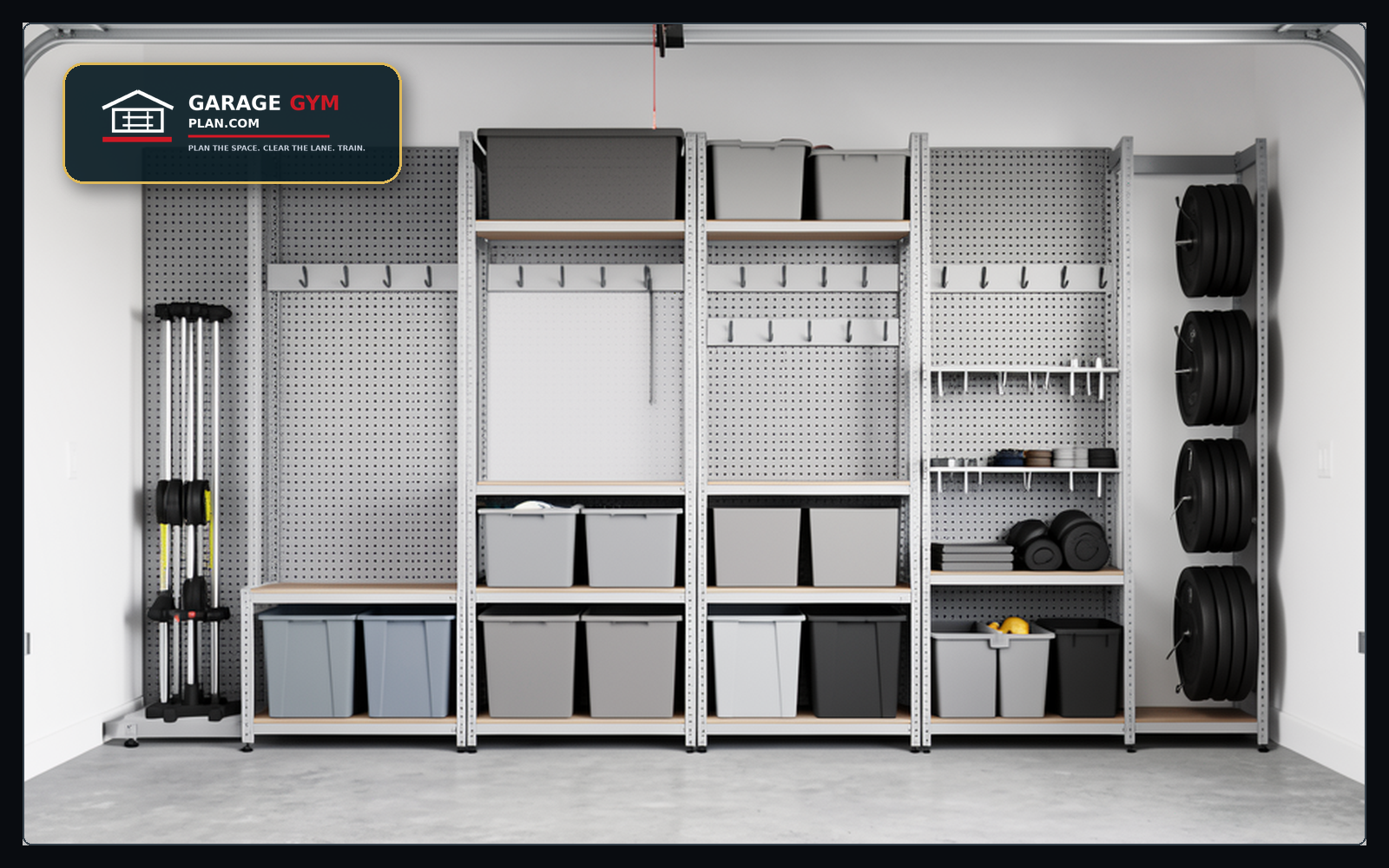
Use this guide if
- Multiple people use the garage or move equipment
- Small accessories disappear into bins and shelves
- You want the reset to happen without thinking
The planning sequence
- Step 1: Label by workout action: bands, collars, cable handles, straps, towels, cleaning
- Step 2: Put the label where it is visible from normal standing height
- Step 3: Use smaller sub-bins for mixed accessory categories
- Step 4: Keep labels short enough to read quickly during cleanup
- Step 5: Review labels after a month and rename bins people actually misunderstand
Common mistakes to avoid
- Using broad labels like “misc” or “gym stuff”
- Labeling bins that are too deep to use quickly
- Keeping labels hidden when the shelf is full
What to compare before you buy
Label by action and station, not just object name. “Rack collars,” “cable handles,” and “mobility bands” work better than one bin called accessories.
| Product path | Use it when | Check before ordering | Compare |
|---|---|---|---|
| Garage Storage Labels | Best when it solves creating storage that only one person understands and nobody resets without crowding the training lane. | Verify size, mounting/support, capacity language, and return rules on the current product page. | View options |
| Label Maker | Best when it solves creating storage that only one person understands and nobody resets without crowding the training lane. | Verify size, mounting/support, capacity language, and return rules on the current product page. | View options |
| Clear Bins With Labels | Best when it solves creating storage that only one person understands and nobody resets without crowding the training lane. | Verify size, mounting/support, capacity language, and return rules on the current product page. | View options |
- Use labels where cleanup decisions happen: shelves, bins, hooks, and tool drawers.
- Keep labels short enough to read while holding equipment.
- Check label adhesion, moisture resistance, and visibility in garage lighting.
Garage Gym Plan may earn from qualifying retailer links. Search links are starting points, not final endorsements; verify the current product specs and installation instructions before buying.
Garage Gym Reset Kit
Measure the garage, choose the storage path, and turn the plan into a printable checklist before buying more equipment.
See the Garage Gym Reset KitTrust check for this decision
The safest choice is the one that fits your measured room and the manufacturer’s current installation requirements. Do not rely on a category name alone. Match the product dimensions to your rack zone, wall structure, walking lane, and storage reset routine.
Before checkout, compare the product page against your garage notes: clearance, mounting surface, weight capacity language, included hardware, delivery weight, and return window. If any of those details are unclear, choose the more conservative option or keep planning with the Garage Gym Reset Kit.
Next pages to plan with this
Use these guides to connect the layout decision to measurement, storage, flooring, and buying order.
Garage Gym Storage Labels: the practical planning layer
Use this section when the basic answer is not enough and you need to decide how the setup should work in a real garage. The goal is not to add more gear; it is to make the garage gym storage labels choice fit the way you train, park, clean, and move through the space.
Gaps to solve before you buy or rearrange
- Durability and best materials for garage gym labels considering temperature, humidity, and wear.. Durability and best materials for garage gym labels considering temperature, humidity, and wear.
- A comparison of DIY labeling solutions (e.g., printable, handmade) versus professional or custom-printed labels, including cost-effectiveness.. A comparison of DIY labeling solutions (e.g., printable, handmade) versus professional or custom-printed labels, including cost-effectiveness.
- Specific labeling strategies for different types of gym equipment beyond storage bins (e.g., dumbbells, plates, resistance bands, accessories).. Specific labeling strategies for different types of gym equipment beyond storage bins (e.g., dumbbells, plates, resistance bands, accessories).
- Integration of advanced labeling techniques like QR codes to link to workout routines, equipment maintenance, or inventory tracking.. Integration of advanced labeling techniques like QR codes to link to workout routines, equipment maintenance, or inventory tracking.
- Visual guides or 'before and after' transformations showcasing the impact of effective labeling on garage gym organization.. Visual guides or 'before and after' transformations showcasing the impact of effective labeling on garage gym organization.
Choose this approach when
- Keep the item where it is used, not simply where there is open wall space.
- Leave a clear hand path so the thing can be returned with one hand after a hard set.
- Store the most-used pieces between knee and shoulder height; reserve high shelves for backups and seasonal items.
- You can explain where the item starts, where it goes during the workout, and where it returns afterward.
- The choice improves the main training lane instead of only making the room look more finished.
- The setup still works on a tired day when you are less careful about putting everything back perfectly.
Planning modules to work through
Why Garage Gym Labels are Game-Changers
- Maximize space efficiency and reduce clutter effectively
- Save time finding specific equipment during workouts
- Enhance overall gym safety and promote an orderly environment
Types of Labels for Every Gym Setup
Use this part of the plan to compare the option against your actual floor space, access path, storage return path, and budget. If it does not improve one of those, it is probably not the next upgrade.
Printable Labels: DIY & Cost-Effective
- Cardstock versus adhesive paper for different applications
- Utilize free templates and design software for custom looks
- Laminate for added durability against moisture and wear
Vinyl Labels: Durable & Professional Look
- Explore custom cut vinyl options for a sleek finish
- Benefit from weather and moisture resistance for longevity
- Learn proper application techniques for bubble-free results
Chalkboard/Whiteboard Labels: Flexible & Reusable
- Enjoy the ease of changing label contents as needed
- Ideal for evolving gym setups or seasonal equipment
- Best suited for storage bins, drawers, or mobile carts
Tag Labels: For Smaller Items & Racks
- Secure tags with zip ties or rings for quick attachment
- Implement color-coding options for different categories
- Perfect for resistance bands, cable attachments, or lifting straps
Terms and fit checks to keep straight
These related ideas tend to appear around this topic. Use them as fit checks, not as a shopping list:
- Garage Storage: confirm that this detail applies to your garage, your equipment, and your training style before treating it as a must-have.
- Gym Storage: confirm that this detail applies to your garage, your equipment, and your training style before treating it as a must-have.
- Storage Labels: confirm that this detail applies to your garage, your equipment, and your training style before treating it as a must-have.
- Garage Gym: confirm that this detail applies to your garage, your equipment, and your training style before treating it as a must-have.
- Storage Bins: confirm that this detail applies to your garage, your equipment, and your training style before treating it as a must-have.
- Organization Labels: confirm that this detail applies to your garage, your equipment, and your training style before treating it as a must-have.
- Equipment Storage: confirm that this detail applies to your garage, your equipment, and your training style before treating it as a must-have.
- Home Gym: confirm that this detail applies to your garage, your equipment, and your training style before treating it as a must-have.
- Labeling Bins: confirm that this detail applies to your garage, your equipment, and your training style before treating it as a must-have.
- Garage Organization: confirm that this detail applies to your garage, your equipment, and your training style before treating it as a must-have.
Before-and-after layout check
- Measure the clear walking lane with the garage door open and closed.
- Mark the equipment footprint with painter tape, including the space needed to load, unload, and turn around.
- Stand where you will start the workout and make sure the first action is obvious.
- Put the heaviest or most awkward item back in its storage spot three times; if that feels clumsy, move the storage lower or closer.
- Check whether the setup still leaves a simple path for cleaning, parking, trash bins, bikes, or family gear.
- Take one photo from the garage entry and one photo from the rack area; if either view looks blocked, simplify before buying more.
Common questions
Why should I bother labeling my garage gym equipment?
Labeling your garage gym equipment significantly improves organization and efficiency. It helps you quickly locate specific items, reduces clutter, and saves valuable workout time by eliminating the search for misplaced gear, ultimately enhancing your overall training experience.
What are the most durable label types for a garage gym environment?
For a garage gym, durable options like laminated printable labels, custom vinyl decals, or sturdy plastic tags are highly recommended. These materials are more resistant to moisture, temperature fluctuations, and general wear and tear, ensuring your labels remain legible and intact over time.
How can I make my garage gym labels easy to read and understand quickly?
To ensure quick readability, use clear, bold fonts and a contrasting color scheme for your labels. Incorporating simple icons or images alongside text can also help with instant recognition, especially for items like dumbbells or resistance bands where a visual cue is effective.
Should I label individual weights, such as dumbbells and kettlebells, or just their storage racks?
For optimal organization, it's best to do both. Labeling the individual weights (e.g., 20lb dumbbell) ensures they are returned to the correct spot, while labeling the storage rack or shelf (e.g.,"Dumbbells 5-50lbs") provides a clear system for keeping everything in its designated place.
What's the best way to maintain my garage gym's labeling system over time?
To maintain your labeling system, regularly check labels for wear and tear, replacing any that become faded or damaged. Periodically review your equipment and storage layout, updating labels as your gym evolves or new items are added, ensuring the system remains accurate and effective.
When to keep it simple
Do not overbuild this page’s recommendation into a full-room remodel if the bottleneck is small. For many garage gyms, the right next move is one clear return spot, one better measurement, or one safer walking lane. Upgrade only after the current setup proves what is actually slowing down the workout.
For a deeper plan, pair this page with the garage gym measurement checklist, the layout cheat sheet, and the organization planner.
Measurement and buying sanity checks
Use these numbers as planning checks, not as live product claims. Final purchases should be verified against the current listing and manufacturer instructions.
- Measure before product: Write down the exact wall width, depth, ceiling height, car-door swing, walking lane, and where the item will reset after a workout.
- Use price bands carefully: Treat price ranges as planning estimates only. Verify current prices, shipping, dimensions, ratings, and return policies on the live listing.
- Keep the lane clear: The best-looking storage is a bad choice if it creates a toe-stub, blocks the car, hides daily gear, or requires moving three items before training.