
Garage Gym Cleaning and Maintenance Checklist
Bottom line
Clean the training lane, wipe high-touch equipment, control humidity, and inspect rack, shelf, mat, and plate storage before the mess turns into a safety or rust problem.
Decision table
| Situation | Best move | Avoid |
|---|---|---|
| Dust, chalk, and loose debris | Weekly sweep or vacuum plus a quick mat wipe-down | Waiting until plates, mats, and shoes track debris across the whole garage |
| Bare steel, plates, or bars feel damp | Add airflow, wipe metal, and check humidity before storing gear tight against walls | Sealing wet gear in bins or under covers |
| Shelves, hooks, or wall storage are overloaded | Reset labels, remove rarely used items, and verify anchors/load limits | Adding another shelf before fixing the storage path |
| Shared garage keeps getting cluttered | Use a 10-minute reset checklist after workouts | Letting household items creep into the rack or walking lane |
A garage gym stays easier to use when cleaning, wiping, organizing, and rust checks are tied to a simple weekly reset.
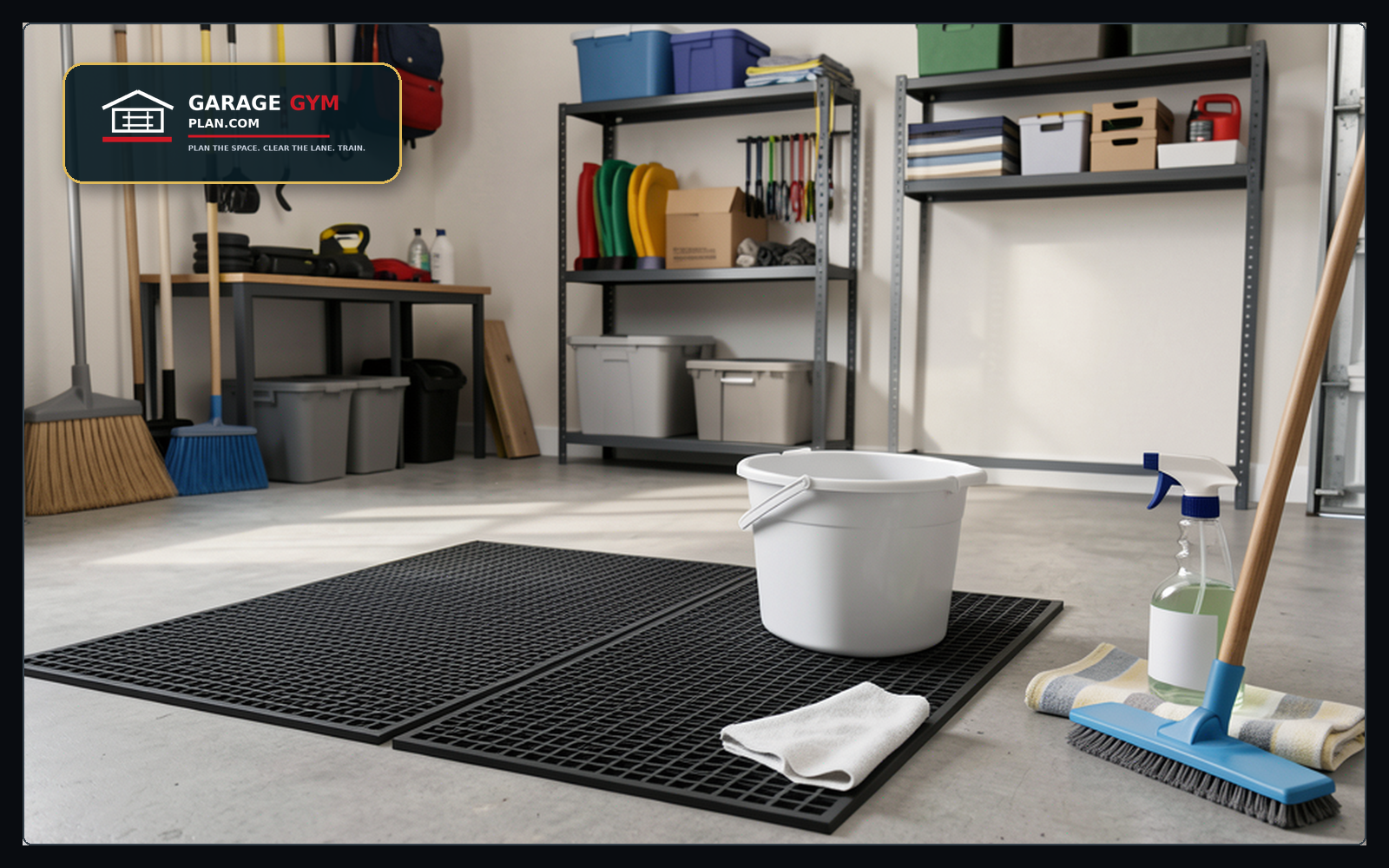
Use this guide if
- Dust, leaves, sweat, chalk, or humidity build up quickly
- Bars, plates, mats, and shelves need basic care
- You want the gym to reset before clutter becomes normal
The planning sequence
- Step 1: Sweep or vacuum the main lane before small items disappear under equipment
- Step 2: Wipe sweat-contact surfaces after hard sessions
- Step 3: Return collars, bands, and tools to their labeled homes
- Step 4: Check bars, plates, and rack contact points for moisture or grit
- Step 5: Do a five-minute shelf reset at the end of the week
Common mistakes to avoid
- Waiting until the garage feels dirty before cleaning mats
- Letting chalk, leaves, and grit collect under benches and plates
- Ignoring small storage drift until workout setup takes longer
Next pages to plan with this
Use these guides to connect the layout decision to measurement, storage, flooring, and buying order.
Garage Gym Cleaning Maintenance Checklist: the practical planning layer
Use this section when the basic answer is not enough and you need to decide how the setup should work in a real garage. The goal is not to add more gear; it is to make the garage gym cleaning maintenance checklist choice fit the way you train, park, clean, and move through the space.
Gaps to solve before you buy or rearrange
- Eco-friendly cleaning product recommendations for gym equipment and surfaces. Eco-friendly cleaning product recommendations for gym equipment and surfaces
- Specific maintenance tips for different types of garage gym flooring (rubber, concrete, interlocking tiles). Specific maintenance tips for different types of garage gym flooring (rubber, concrete, interlocking tiles)
- Troubleshooting common garage gym equipment issues (e.g., squeaky machines, rust prevention beyond cleaning). Troubleshooting common garage gym equipment issues (e.g., squeaky machines, rust prevention beyond cleaning)
- Seasonal maintenance considerations for garage gyms (e.g., humidity control, extreme temperatures). Seasonal maintenance considerations for garage gyms (e.g., humidity control, extreme temperatures)
- Integrating smart home tech or automation for gym environment monitoring (air quality, temperature). Integrating smart home tech or automation for gym environment monitoring (air quality, temperature)
Choose this approach when
- Buy the piece that removes the biggest training bottleneck first, not the piece that looks best in a finished gym photo.
- Check footprint, storage, warranty, return rules, and replacement parts before ordering.
- A cheaper item is not cheaper if it forces a second purchase or blocks the main lift lane.
- You can explain where the item starts, where it goes during the workout, and where it returns afterward.
- The choice improves the main training lane instead of only making the room look more finished.
- The setup still works on a tired day when you are less careful about putting everything back perfectly.
Planning modules to work through
Introduction to Your Garage Gym's Longevity
- Importance of regular cleaning and maintenance
- Benefits of a well-maintained garage gym
- Overview of the checklist
Why a Clean & Maintained Garage Gym Matters
- Health and hygiene benefits (preventing bacteria/germs)
- Extending equipment lifespan and preventing costly repairs
- Enhancing motivation and workout environment
Essential Cleaning & Maintenance Supplies
- Disinfectant wipes/sprays, microfaser cloths, vacuum, broom, mop, degreaser
- Lubricants, wrenches, screwdrivers for maintenance
- Storage solutions for cleaning supplies
Daily Post-Workout Routine
- Wiping down all high-touch surfaces and equipment
- Sweeping/vacuuming loose dust and debris
- Putting away weights and accessories
Weekly Cleaning & Maintenance Tasks
- Deep cleaning benches, mats, and flooring
- Inspecting for loose bolts, frayed cables, or unusual noises
- Emptying trash and cleaning bins
Monthly Deep Cleaning & Preventive Maintenance
- Thoroughly cleaning and disinfecting all equipment, including hard-to-reach areas
- Lubricating moving parts on cardio machines and weight racks
- Checking electrical cords, outlets, and lighting
Before-and-after layout check
- Measure the clear walking lane with the garage door open and closed.
- Mark the equipment footprint with painter tape, including the space needed to load, unload, and turn around.
- Stand where you will start the workout and make sure the first action is obvious.
- Put the heaviest or most awkward item back in its storage spot three times; if that feels clumsy, move the storage lower or closer.
- Check whether the setup still leaves a simple path for cleaning, parking, trash bins, bikes, or family gear.
- Take one photo from the garage entry and one photo from the rack area; if either view looks blocked, simplify before buying more.
Common questions
How often should I clean my garage gym?
You should perform a quick wipe-down after every workout, weekly deep cleaning for surfaces and equipment, and monthly comprehensive maintenance checks for equipment functionality and lubrication. This layered approach ensures hygiene and extends the life of your gym gear.
What are the most important cleaning supplies for a garage gym?
Essential supplies include disinfectant wipes or sprays (alcohol- or hydrogen peroxide-based), microfiber cloths, a broom or vacuum, and a mop for flooring. For maintenance, a basic toolkit with wrenches, screwdrivers, and a good quality lubricant is crucial.
How do I prevent rust on my garage gym equipment?
To prevent rust, ensure your garage gym is well-ventilated and consider using a dehumidifier, especially in humid climates. Regularly wipe down metal equipment after use to remove sweat, and apply a light coat of rust preventative or silicone spray on susceptible areas.
Is it safe to use household cleaners on gym equipment?
It depends on the cleaner and equipment. Avoid harsh abrasive cleaners, ammonia, or bleach, as these can damage upholstery, electronic screens, and painted surfaces. Opt for pH-neutral disinfectants or cleaners specifically designed for gym equipment to ensure safety and effectiveness.
How can I keep my garage gym from smelling musty?
Combat musty odors by ensuring good air circulation with fans or open doors during and after workouts. Regularly clean and dry all mats and equipment, address any moisture issues, and consider using odor absorbers like activated charcoal or baking soda.
When to keep it simple
Do not overbuild this page’s recommendation into a full-room remodel if the bottleneck is small. For many garage gyms, the right next move is one clear return spot, one better measurement, or one safer walking lane. Upgrade only after the current setup proves what is actually slowing down the workout.
For a deeper plan, pair this page with the garage gym measurement checklist, the layout cheat sheet, and the organization planner.
Garage Gym Reset Kit
Measure the garage, choose the storage path, and turn the plan into a printable checklist before buying more equipment.
See the Garage Gym Reset KitMeasurement and buying sanity checks
Use these numbers as planning checks, not as live product claims. Final purchases should be verified against the current listing and manufacturer instructions.
- Measure before product: Write down the exact wall width, depth, ceiling height, car-door swing, walking lane, and where the item will reset after a workout.
- Use price bands carefully: Treat price ranges as planning estimates only. Verify current prices, shipping, dimensions, ratings, and return policies on the live listing.
- Keep the lane clear: The best-looking storage is a bad choice if it creates a toe-stub, blocks the car, hides daily gear, or requires moving three items before training.