
Garage Gym Accessory Storage: Bands, Handles, Collars, Straps, and Pins
Accessories are small enough to lose and important enough to slow down every workout. Give them homes based on when they are used.
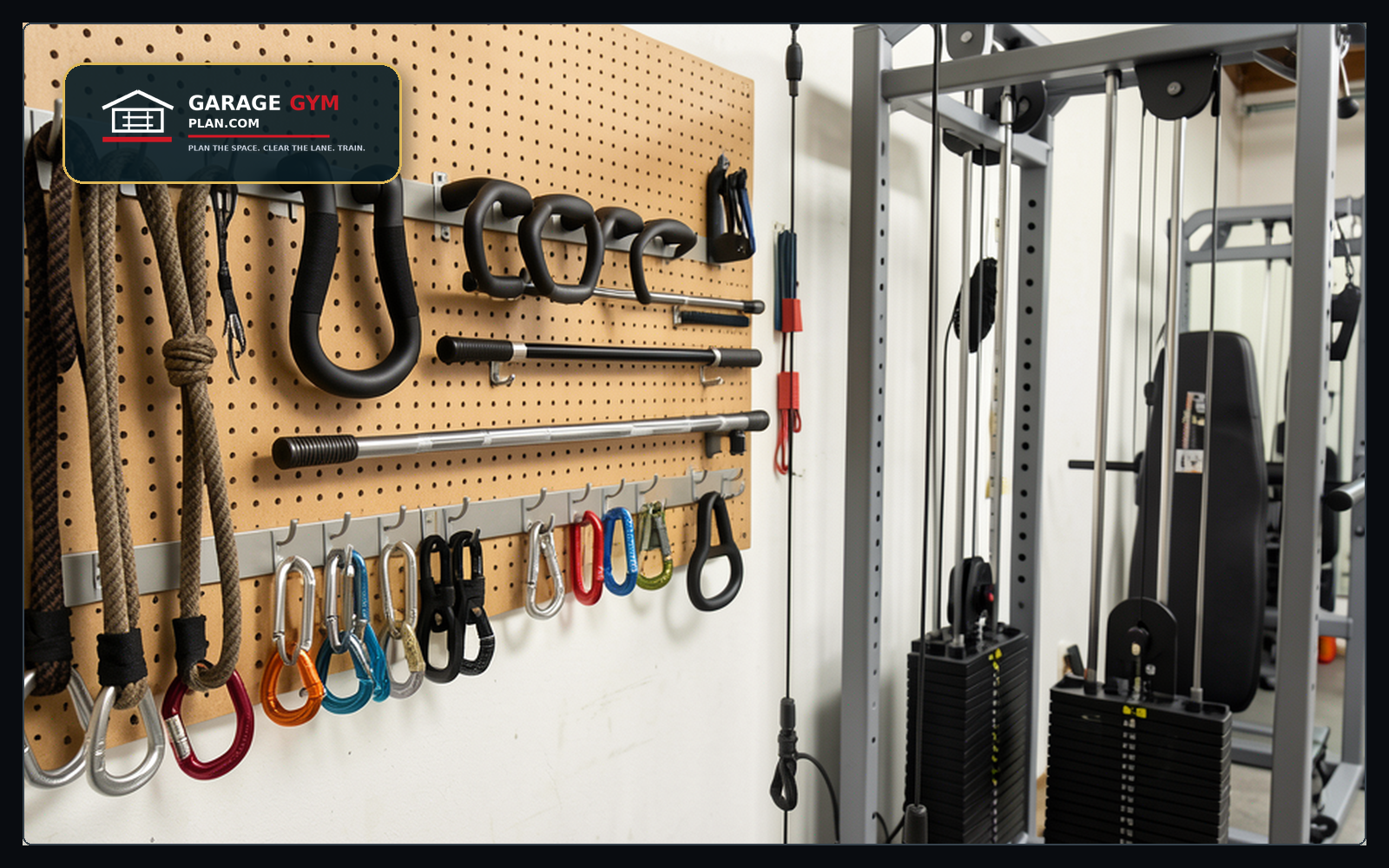
Use this guide if
- Bands, collars, straps, handles, and pins collect on the rack or floor
- You use cable attachments, specialty bars, or adjustable equipment
- You want faster setup with less visual clutter
The planning sequence
- Step 1: Put collars and clips at the rack, not across the room
- Step 2: Hang bands by type and tension where they are easy to see
- Step 3: Store cable handles near the cable station or pulley setup
- Step 4: Keep straps, wraps, and sleeves in one visible personal gear bin
- Step 5: Use labels for small parts that look similar but serve different jobs
Common mistakes to avoid
- Using one deep bin for every accessory
- Hanging bands where they block plates or J-cups
- Keeping pins and collars loose on shelves where they roll away
What to compare before you buy
Use visible shallow storage for high-frequency accessories and closed bins only for low-frequency items. The right module makes setup faster instead of simply hiding clutter.
| Product path | Use it when | Check before ordering | Compare |
|---|---|---|---|
| Gym Accessory Wall Rack | Best when it solves small accessories disappearing into bins or hanging where they snag the bar path without crowding the training lane. | Verify size, mounting/support, capacity language, and return rules on the current product page. | View options |
| Collar And Band Organizer | Best when it solves small accessories disappearing into bins or hanging where they snag the bar path without crowding the training lane. | Verify size, mounting/support, capacity language, and return rules on the current product page. | View options |
| Cable Attachment Rack | Best when it solves small accessories disappearing into bins or hanging where they snag the bar path without crowding the training lane. | Verify size, mounting/support, capacity language, and return rules on the current product page. | View options |
- Group accessories by station: rack, cable, mobility, cleaning, and personal gear.
- Keep pins, collars, and handles where they are used, not across the room.
- Check hook size, wall mounting method, and weight limits before installing.
Garage Gym Plan may earn from qualifying retailer links. Search links are starting points, not final endorsements; verify the current product specs and installation instructions before buying.
Garage Gym Reset Kit
Measure the garage, choose the storage path, and turn the plan into a printable checklist before buying more equipment.
See the Garage Gym Reset KitTrust check for this decision
The safest choice is the one that fits your measured room and the manufacturer’s current installation requirements. Do not rely on a category name alone. Match the product dimensions to your rack zone, wall structure, walking lane, and storage reset routine.
Before checkout, compare the product page against your garage notes: clearance, mounting surface, weight capacity language, included hardware, delivery weight, and return window. If any of those details are unclear, choose the more conservative option or keep planning with the Garage Gym Reset Kit.
Next pages to plan with this
Use these guides to connect the layout decision to measurement, storage, flooring, and buying order.
Garage Gym Accessory Storage: the practical planning layer
Use this section when the basic answer is not enough and you need to decide how the setup should work in a real garage. The goal is not to add more gear; it is to make the garage gym accessory storage choice fit the way you train, park, clean, and move through the space.
Gaps to solve before you buy or rearrange
- DIY Garage Gym Accessory Storage Projects and Ideas. DIY Garage Gym Accessory Storage Projects and Ideas
- Budget-Friendly Home Gym Organization. Affordable Solutions
- Smart Storage Hacks for Small Garage Gyms and Tight Spaces. Smart Storage Hacks for Small Garage Gyms and Tight Spaces
- How to Store Specific Gym Accessories (Resistance Bands, Jump Ropes, Lifting Belts, Mobility Tools, etc.). How to Store Specific Gym Accessories (Resistance Bands, Jump Ropes, Lifting Belts, Mobility Tools, etc.)
- Long-Term Organization Strategies. Maintaining a Clutter-Free Workout Space
Choose this approach when
- Keep the item where it is used, not simply where there is open wall space.
- Leave a clear hand path so the thing can be returned with one hand after a hard set.
- Store the most-used pieces between knee and shoulder height; reserve high shelves for backups and seasonal items.
- You can explain where the item starts, where it goes during the workout, and where it returns afterward.
- The choice improves the main training lane instead of only making the room look more finished.
- The setup still works on a tired day when you are less careful about putting everything back perfectly.
Planning modules to work through
The Clutter Challenge: Why Garage Gym Accessory Storage Matters
- Common frustrations with disorganized gym spaces
- Impact on workout efficiency and safety
- Maximizing limited garage space
Benefits of a Well-Organized Garage Gym
- Enhanced workout flow and motivation
- Protecting equipment from damage
- Creating a safer training environment
Assessing Your Storage Needs: A Pre-Planning Guide
- Inventorying all gym accessories
- Measuring available wall, floor, and ceiling space
- Considering your budget and aesthetic preferences
Wall-Mounted Storage: Maximizing Vertical Space
- Versatility of slatwall and pegboard systems for various attachments
- Secure racks and holders for barbells and weight plates
- Hooks and hangers for bands, ropes, and smaller items
Floor-Standing Storage: Stable & Accessible Solutions
- Dedicated racks for dumbbells, kettlebells, and bumper plates
- Multi-purpose mass storage systems
- Combining storage with functional pieces like benches
Innovative and DIY Storage Hacks
- Creative re-purposing of household items
- Simple and cost-effective PVC pipe or magnetic strip solutions
- Utilizing overhead space with shelving or ceiling-mounted racks
Terms and fit checks to keep straight
These related ideas tend to appear around this topic. Use them as fit checks, not as a shopping list:
- Accessory Storage: confirm that this detail applies to your garage, your equipment, and your training style before treating it as a must-have.
- Home Gym: confirm that this detail applies to your garage, your equipment, and your training style before treating it as a must-have.
- Gym Storage: confirm that this detail applies to your garage, your equipment, and your training style before treating it as a must-have.
- Garage Gym: confirm that this detail applies to your garage, your equipment, and your training style before treating it as a must-have.
- Gym Equipment: confirm that this detail applies to your garage, your equipment, and your training style before treating it as a must-have.
- Storage Solutions: confirm that this detail applies to your garage, your equipment, and your training style before treating it as a must-have.
- Workout Equipment: confirm that this detail applies to your garage, your equipment, and your training style before treating it as a must-have.
- Equipment Storage: confirm that this detail applies to your garage, your equipment, and your training style before treating it as a must-have.
- Storage Racks: confirm that this detail applies to your garage, your equipment, and your training style before treating it as a must-have.
- Wall Storage: confirm that this detail applies to your garage, your equipment, and your training style before treating it as a must-have.
Before-and-after layout check
- Measure the clear walking lane with the garage door open and closed.
- Mark the equipment footprint with painter tape, including the space needed to load, unload, and turn around.
- Stand where you will start the workout and make sure the first action is obvious.
- Put the heaviest or most awkward item back in its storage spot three times; if that feels clumsy, move the storage lower or closer.
- Check whether the setup still leaves a simple path for cleaning, parking, trash bins, bikes, or family gear.
- Take one photo from the garage entry and one photo from the rack area; if either view looks blocked, simplify before buying more.
Common questions
What are the most common accessories I need to store in a garage gym?
Common accessories include dumbbells, barbells, weight plates (bumper and iron), kettlebells, resistance bands, jump ropes, cable attachments, foam rollers, and yoga mats. Efficient storage for these items prevents clutter and makes your workout space more functional and enjoyable.
How can I store barbells safely and efficiently in a garage gym?
Barbells can be stored vertically in wall-mounted gun racks or horizontal holders to save floor space, or on dedicated floor-standing racks. Ensure the storage solution is securely mounted or stable to prevent accidental falls and damage to the bar or surrounding area.
What's the best way to organize small gym accessories like bands and jump ropes?
Small accessories like resistance bands, jump ropes, and lifting belts are best stored using wall-mounted hooks, pegboards, or dedicated accessory racks. Clear bins or drawers can also be effective for keeping these items tidy and easily accessible, preventing tangles and loss.
Are there any DIY storage solutions for garage gym accessories?
Yes, many DIY solutions exist, such as using PVC pipes for storing resistance bands or foam rollers, converting old shelves into weight plate holders, or installing simple pegboards with custom hooks. These options are often cost-effective and can be tailored to your specific needs.
How do I protect my gym equipment from rust and damage in a garage environment?
To protect equipment, store it in a clean, dry environment, preferably off the floor. Use rust-preventative sprays on metal parts, apply appropriate oils to barbells, and consider dehumidifiers if your garage is prone to moisture. Proper storage systems also prevent physical damage.
When to keep it simple
Do not overbuild this page’s recommendation into a full-room remodel if the bottleneck is small. For many garage gyms, the right next move is one clear return spot, one better measurement, or one safer walking lane. Upgrade only after the current setup proves what is actually slowing down the workout.
For a deeper plan, pair this page with the garage gym measurement checklist, the layout cheat sheet, and the organization planner.
Measurement and buying sanity checks
Use these numbers as planning checks, not as live product claims. Final purchases should be verified against the current listing and manufacturer instructions.
- Measure before product: Write down the exact wall width, depth, ceiling height, car-door swing, walking lane, and where the item will reset after a workout.
- Use price bands carefully: Treat price ranges as planning estimates only. Verify current prices, shipping, dimensions, ratings, and return policies on the live listing.
- Keep the lane clear: The best-looking storage is a bad choice if it creates a toe-stub, blocks the car, hides daily gear, or requires moving three items before training.