
Garage Gym Budget Planner
A good budget is a sequence, not a shopping list. Spend first on the items that make training safe and repeatable, then add comfort, storage speed, and specialty pieces after the layout proves itself.
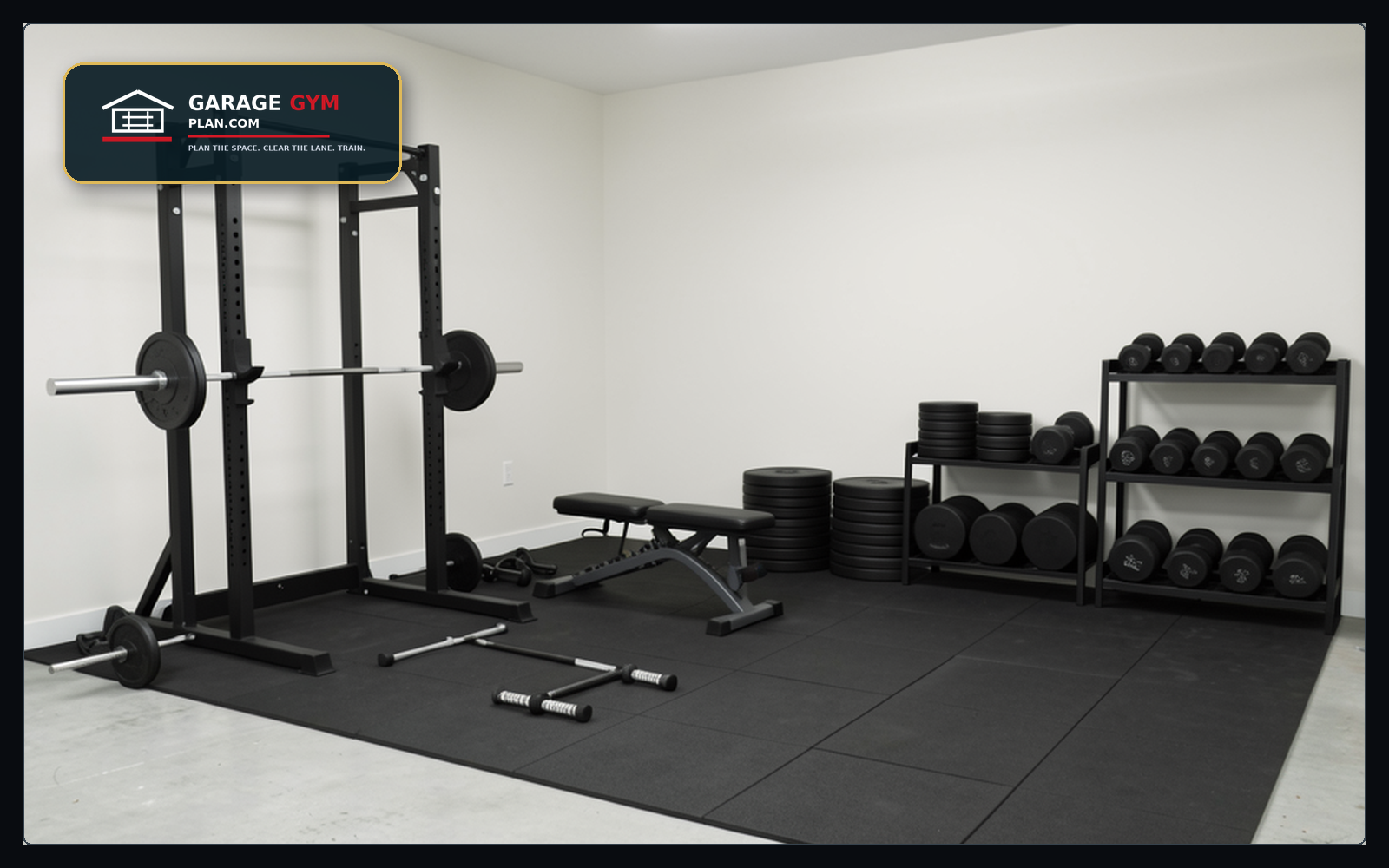
Bottom line
Start with measurements, flooring/rack fit, bar and plates, and basic storage. Delay specialty attachments, duplicate accessories, and decorative upgrades until the first training lane is working. Keep a small reserve for hardware, mats, lighting, and fixes you discover during setup.
Decision table
| Budget stage | Buy first | Delay | Why | Compare |
|---|---|---|---|---|
| Planning | Tape, measurements, layout worksheet | Random sale items | Bad fit wastes more money than slow buying | Plan first |
| Training core | Rack/stand, bar, plates, bench, collars | Specialty bars and machines | This creates the basic strength lane | View options |
| Protection and safety | Flooring, lighting, wall mounting, storage | Decor and extra handles | The garage must stay safe and usable | View options |
| Expansion | Accessories tied to actual workouts | Duplicates and novelty gear | Only add what solves a repeated friction point | Plan first |
Checks before you buy or rearrange
Budget for delivery, mounting hardware, and mat cutting.
Check ceiling height before buying a tall rack.
Do not spend the storage budget before the rack and car paths are mapped.
Use used equipment only when condition and dimensions are verified.
How to use this in a real garage
The budget should protect future choices. A cheaper first purchase is not cheaper if it forces you to rebuild the floor, sell the rack, or move every shelf later.
Walk the route you use during a normal workout: enter the garage, reach the equipment, load the bar or station, train, unload, and reset. The right storage decision should shorten that sequence and leave the shared garage easier to use after training.
Garage Gym Reset Kit
Measure the garage, choose the storage path, and turn the plan into a printable checklist before buying more equipment.
See the Garage Gym Reset KitFit notes by setup
Planning
Tape, measurements, layout worksheet is the main fit signal. The practical mistake is random sale items. Before you buy or move anything, use this check: bad fit wastes more money than slow buying. If that check fails, change the location before changing the product.
Training core
Rack/stand, bar, plates, bench, collars is the main fit signal. The practical mistake is specialty bars and machines. Before you buy or move anything, use this check: this creates the basic strength lane. If that check fails, change the location before changing the product.
Protection and safety
Flooring, lighting, wall mounting, storage is the main fit signal. The practical mistake is decor and extra handles. Before you buy or move anything, use this check: the garage must stay safe and usable. If that check fails, change the location before changing the product.
Expansion
Accessories tied to actual workouts is the main fit signal. The practical mistake is duplicates and novelty gear. Before you buy or move anything, use this check: only add what solves a repeated friction point. If that check fails, change the location before changing the product.
Common mistakes to avoid
- Buying the holder, shelf, jack, or accessory because it looks organized in a photo instead of because it solves your exact lane problem.
- Measuring the product footprint but not the working path around it. Bars, benches, plates, doors, and people need room to move.
- Letting the new storage location create a trip point, toe-stub, car-door conflict, or hard-to-reset corner.
- Keeping too many rarely used items in the premium rack-side zone while the daily-use items sit across the garage.
Good fit vs. bad fit signals
A good setup feels boring after the first week. The item has one obvious home, you can reach it without moving unrelated gear, and the garage still works for parking, tools, bikes, trash cans, and family traffic. A bad setup usually announces itself through repeated small annoyances: a bar that must be tilted past shelves, a hook that catches clothing, a bin that lives on the floor, or a storage product that looks clean only when the garage is empty.
Keep the useful parts and remove the ceremony. If a solution requires multiple reminders, labels, or resets just to stay safe, simplify the zone. Move the item closer to its use point, reduce the number of products in that area, or accept that this garage needs a smaller footprint than the product photo suggests.
Quick test before you call it done
Run one normal workout using the new plan. Set a timer for the setup and reset, then note every item you had to move twice. The page-level goal is not perfect organization; it is a garage that trains cleanly, resets quickly, and does not feel stuffed with keyword-friendly but useless advice.
- Budget for delivery, mounting hardware, and mat cutting.
- Check ceiling height before buying a tall rack.
- Do not spend the storage budget before the rack and car paths are mapped.
- Use used equipment only when condition and dimensions are verified.
Keep, cut, or move
Use this as a decision filter: keep the item or setup if it makes the next workout easier to start, easier to reset, and safer for everyone who shares the garage. Cut it if it only adds another surface, slot, or bin without solving a repeated problem. Move it if the product is useful but sits in the wrong zone.
Most garage-gym clutter is not one bad purchase. It is a chain of almost-good decisions: a holder mounted a little too far from the rack, a shelf that is a little too deep, a bar that fits only when the car is gone, or an accessory bin that is convenient until it becomes the place every small part disappears. Fix the chain by choosing one clear home for the item and one clear lane that storage never crosses.
Before-and-after check
Before changing the setup, take one photo from the garage door and one from the house entry. After the change, take the same photos and ask three questions: is the training lane easier to see, are heavy items lower and more stable, and can a non-lifter understand where to walk? If the answer is no, the garage still needs a simpler plan.
Budget sanity check
Spend first on the items that keep training consistent: safe flooring, stable rack or stand choice, the bar and plates you will use most, and storage that keeps the room resettable.
Budget bands and affiliate-safe planning
Use these numbers as planning checks, not as live product claims. Final purchases should be verified against the current listing and manufacturer instructions.
- Use ranges, not promises: Use price bands to compare storage decisions, not as live offers. Marketplace pricing changes quickly with brand, shipping, coupons, and inventory.
- Hidden costs: Include flooring cuts, hardware, anchors, delivery, returns, tool rentals, wall repair, bins/labels, and the cost of buying the wrong footprint.
- Final check: Before purchase, verify current price, dimensions, weight capacity, compatibility, warranty, and return policy on the live product page.
Source and verification notes
Use this as planning guidance, not a substitute for manufacturer instructions or local building/electrical rules. Verify load ratings, mounting hardware, rack instructions, mat specifications, and product dimensions before installation.