
One-Car Garage Gym Layout: Plan a Compact Home Gym That Still Works
A one-car garage gym works when the training area, rack footprint, storage wall, door path, and parking needs are planned before the equipment list grows.
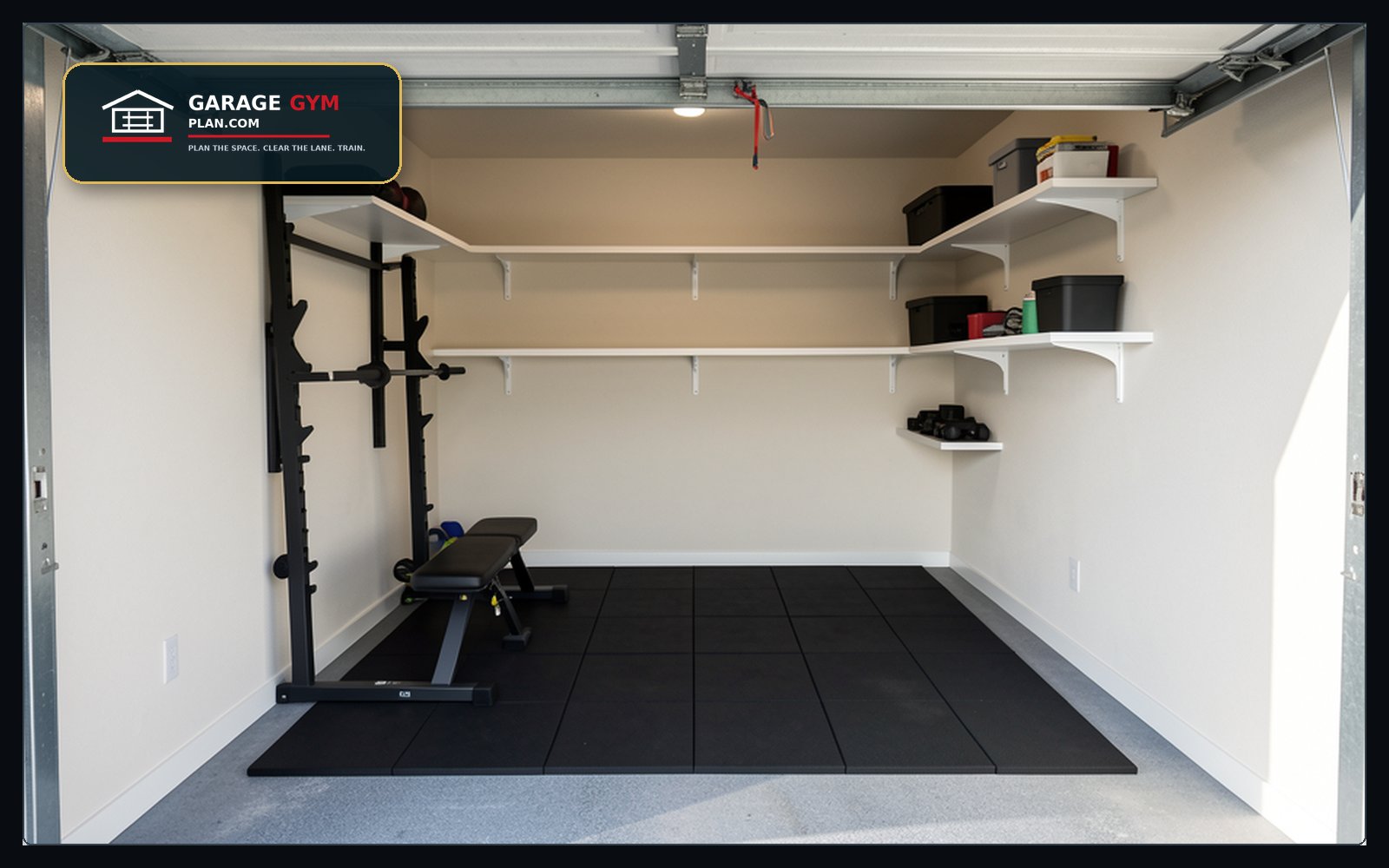
Quick answer: the best one-car garage gym layout
The best one-car garage gym layout usually puts the main rack or strength station against the longest usable wall, keeps plates and bars within one step of the rack, and protects one open rectangle for warmups, pulls, dumbbells, and setup. If a car still parks inside, the car rectangle and door swing come first. If the garage is fully converted, the walking lane and storage wall come first.
Use this order before buying: measure the real usable space, choose the training anchor, mark the no-storage workout rectangle, place flooring only where training happens, then add wall storage around the reset path. That sequence prevents the most common one-car mistake: buying equipment that technically fits but makes every workout feel cramped.
- Best for strength: rack or squat stand on the long wall, plates beside it, bench parked vertically or under the rack path.
- Best for shared parking: folding rack, rolling bench, vertical bar storage, and a floor edge the car never crosses.
- Best for mixed training: compact rack or stand plus adjustable dumbbells, kettlebells, and a clear mat lane.
5-step one-car garage gym planning framework
- Measure the fixed obstacles. Record finished floor-to-ceiling height, garage door rail height, opener position, steps, water heater, utility panels, outlets, windows, and the house-door swing. Use the lowest real obstruction, not the listed garage height.
- Mark the must-stay-clear zones. Tape the car rectangle, door swing, walking path, and emergency exit before placing gym gear. If the car is gone permanently, still protect a walking lane from the house door to the main garage door.
- Choose one training anchor. Pick the rack, squat stand, dumbbell station, or conditioning lane that matters most. A one-car layout can support many workouts, but it should not start with three competing anchors.
- Put storage where setup happens. Plates belong near the bar path. Bands, collars, handles, and towels belong where they are used. Seasonal bins and tools should move high, shallow, or away from the workout rectangle.
- Test the reset before upgrading. Do three normal workouts. If setup takes too long, fix the storage and bench path before adding specialty bars, cardio gear, or more shelves.
Layout options for a one-car garage
| Layout pattern | Works best when | Watch out for | Compare |
|---|---|---|---|
| Long-wall rack layout | The garage no longer parks a car, or the rack can stay outside the tire path. | Bar sleeve loading room can collide with shelves, bikes, or the house-door walkway. | View options |
| Folding-rack shared layout | A car, mower, or bikes still use the garage between workouts. | Folding only helps if the bench, plates, and bar also have fast homes. | View options |
| Back-wall compact layout | The front of the bay needs to stay open for storage or door clearance. | Garage-door tracks, openers, and low ceilings can limit pull-ups and overhead work. | Plan first |
| Dumbbell-first layout | You want strength training without committing to a full rack footprint yet. | Adjustable dumbbells still need pickup clearance, bench movement, and a storage tray. | Plan first |
Space-saving equipment that actually helps
Space-saving equipment is only useful when it reduces setup friction. A folding rack is not automatically better than a compact power rack if plates, safeties, and the bench still block the walking path. Use the equipment list below as a fit check, not a shopping list.
- Folding rack: good when the wall is suitable, the car path matters, and you can store plates and the bench without rebuilding the room every workout.
- Short power rack: good when the gym can stay set up and you need safeties, pull-up options, and consistent bar placement. Check ceiling, rail, and opener clearance first.
- Squat stand with spotter arms: good for a lighter, simpler layout, especially when a full rack would steal the only open floor.
- Adjustable dumbbells: useful when the room needs many training options in one footprint. Keep the stand at a height and location that do not block bench setup.
- Vertical bench or rolling bench: useful when the bench has a defined parking spot close to the rack but outside the main walkway.
Before ordering, verify current dimensions, mounting requirements, weight limits, and return rules from the manufacturer or retailer. Small differences in depth, handle position, wheel placement, or upright height can decide whether a compact layout feels clean or frustrating.
Flooring for a compact garage gym
Do not cover the entire garage just because flooring is sold by square footage. In a one-car setup, the first priority is a stable lifting and pickup zone: rack feet, bench legs, dumbbells, kettlebells, and plate loading. Parking paths, tool zones, and wet corners may be better left as concrete.
| Flooring choice | Best use | Compact-garage tradeoff |
|---|---|---|
| Heavy rubber mats | Rack lane, dumbbell zone, and staged buildouts. | Heavy to move; seams and rubber smell need planning. |
| Rubber rolls | More finished look after the layout is proven. | Less forgiving if the rack, shelves, or car path changes later. |
| Interlocking tiles | Light-duty zones, mobility, or removable coverage. | Thin tiles can shift or feel less stable under heavy equipment. |
| Lifting platform | Repeated deadlifts or Olympic-style lifting. | Can steal height and walking room in a narrow bay. |
Check door clearance after adding flooring thickness. Also check moisture: cars, weather, washing, and humidity can trap water under mats if the garage regularly gets wet.
Storage, lighting, ventilation, and safety checks
Small garage gyms fail when accessories become floor clutter. Use shallow wall storage for bands, collars, straps, jump ropes, towels, and cleaning supplies. Use vertical barbell storage only where the bar will not lean into the walking lane or door path. Put heavy plates low and close to the rack, not across the garage.
Lighting and airflow matter more in a one-car bay because the room is tight. Put bright light on the rack face and open floor so plates, collars, and footing are easy to see. Add a fan path that moves air without putting cords across the workout zone. If the garage gets humid, keep bars and plates off bare concrete and let sweaty gear dry before it goes into bins.
- Anchor racks, shelves, and wall storage according to the product instructions and the wall structure. For general anti-tip awareness around heavy storage, see the CPSC Anchor It campaign.
- Keep electrical cords out of the lifting lane and away from rolling benches, bikes, rowers, or treadmills. For home cord-safety basics, see the NFPA electrical safety guide.
- Do not block utility panels, house exits, garage-door operation, or the route needed to leave quickly.
- Keep family storage, tools, and bikes outside the taped workout rectangle.
Common one-car garage gym mistakes
- Buying by footprint only. The rack may fit, but the bar, bench pullout path, plate loading stance, and walking lane also need room.
- Letting shelves creep into the bar path. Deep storage beside a rack can make loading plates awkward or unsafe.
- Using a folding rack without a reset plan. Fold-away equipment still needs fast homes for bars, plates, safeties, collars, and the bench.
- Ignoring the ceiling and door rail. Pull-ups, presses, tall racks, fans, and overhead storage all compete for vertical clearance.
- Turning the gym into overflow storage. A one-car layout needs a hard line between training gear and household clutter.
Next pages to plan with this
Use these guides to connect the layout decision to measurement, storage, flooring, and buying order.
One Car Garage Gym Layout: the practical planning layer
Use this section when the basic answer is not enough and you need to decide how the setup should work in a real garage. The goal is not to add more gear; it is to make the one car garage gym layout choice fit the way you train, park, clean, and move through the space.
Gaps to solve before you buy or rearrange
- Detailed guide on specific foldable and multi-functional equipment best suited for extremely limited garage footprints, including reviews and space-saving benefits.. Detailed guide on specific foldable and multi-functional equipment best suited for extremely limited garage footprints, including reviews and space-saving benefits.
- Comprehensive breakdown of garage flooring options (e.g., rubber mats, interlocking tiles) focusing on durability, noise reduction, and DIY installation for small areas.. Comprehensive breakdown of garage flooring options (e.g., rubber mats, interlocking tiles) focusing on durability, noise reduction, and DIY installation for small areas.
- Strategies for optimizing natural light, ventilation, and temperature control in a small garage gym to enhance comfort and safety during workouts.. Strategies for optimizing natural light, ventilation, and temperature control in a small garage gym to enhance comfort and safety during workouts.
- Smart storage solutions for gym accessories (bands, towels, foam rollers) and integrating them with existing garage storage to keep the compact space tidy and functional.. Smart storage solutions for gym accessories (bands, towels, foam rollers) and integrating them with existing garage storage to keep the compact space tidy and functional.
- Electrical considerations, safety measures (e.g., anchoring equipment, structural integrity), and lighting upgrades for a well-lit and secure workout environment in a typical single-car garage.. Electrical considerations, safety measures (e.g., anchoring equipment, structural integrity), and lighting upgrades for a well-lit and secure workout environment in a typical single-car garage.
Choose this approach when
- Start with the non-negotiable clearances, then choose equipment that fits those lanes.
- A layout that works on paper can still fail if the garage door, car path, or storage return path is ignored.
- Use tape on the floor before buying the next large piece of equipment.
- You can explain where the item starts, where it goes during the workout, and where it returns afterward.
- The choice improves the main training lane instead of only making the room look more finished.
- The setup still works on a tired day when you are less careful about putting everything back perfectly.
Terms and fit checks to keep straight
These related ideas tend to appear around this topic. Use them as fit checks, not as a shopping list:
- Garage Gym: confirm that this detail applies to your garage, your equipment, and your training style before treating it as a must-have.
- One Car: confirm that this detail applies to your garage, your equipment, and your training style before treating it as a must-have.
- Single Car: confirm that this detail applies to your garage, your equipment, and your training style before treating it as a must-have.
- Home Gym: confirm that this detail applies to your garage, your equipment, and your training style before treating it as a must-have.
- Gym Layout: confirm that this detail applies to your garage, your equipment, and your training style before treating it as a must-have.
- Gym Ideas: confirm that this detail applies to your garage, your equipment, and your training style before treating it as a must-have.
- Garage Space: confirm that this detail applies to your garage, your equipment, and your training style before treating it as a must-have.
- Garage Setup: confirm that this detail applies to your garage, your equipment, and your training style before treating it as a must-have.
- Garage Area: confirm that this detail applies to your garage, your equipment, and your training style before treating it as a must-have.
- Half Garage: confirm that this detail applies to your garage, your equipment, and your training style before treating it as a must-have.
Before-and-after layout check
- Measure the clear walking lane with the garage door open and closed.
- Mark the equipment footprint with painter tape, including the space needed to load, unload, and turn around.
- Stand where you will start the workout and make sure the first action is obvious.
- Put the heaviest or most awkward item back in its storage spot three times; if that feels clumsy, move the storage lower or closer.
- Check whether the setup still leaves a simple path for cleaning, parking, trash bins, bikes, or family gear.
- Take one photo from the garage entry and one photo from the rack area; if either view looks blocked, simplify before buying more.
When to keep it simple
Do not overbuild this page’s recommendation into a full-room remodel if the bottleneck is small. For many garage gyms, the right next move is one clear return spot, one better measurement, or one safer walking lane. Upgrade only after the current setup proves what is actually slowing down the workout.
For a deeper plan, pair this page with the garage gym measurement checklist, the layout cheat sheet, and the organization planner.
Garage Gym Reset Kit
Measure the garage, choose the storage path, and turn the plan into a printable checklist before buying more equipment.
See the Garage Gym Reset KitMeasurement and buying sanity checks
Use these numbers as planning checks, not as live product claims. Final purchases should be verified against the current listing and manufacturer instructions.
- Measure before product: Write down the exact wall width, depth, ceiling height, car-door swing, walking lane, and where the item will reset after a workout.
- Use price bands carefully: Treat price ranges as planning estimates only. Verify current prices, shipping, dimensions, ratings, and return policies on the live listing.
- Keep the lane clear: The best-looking storage is a bad choice if it creates a toe-stub, blocks the car, hides daily gear, or requires moving three items before training.