
Garage Gym Mistakes to Avoid Before Buying Equipment
Most garage gym mistakes happen before the first order: unclear measurements, wrong sequence, ignored storage, and equipment that fits only on paper.
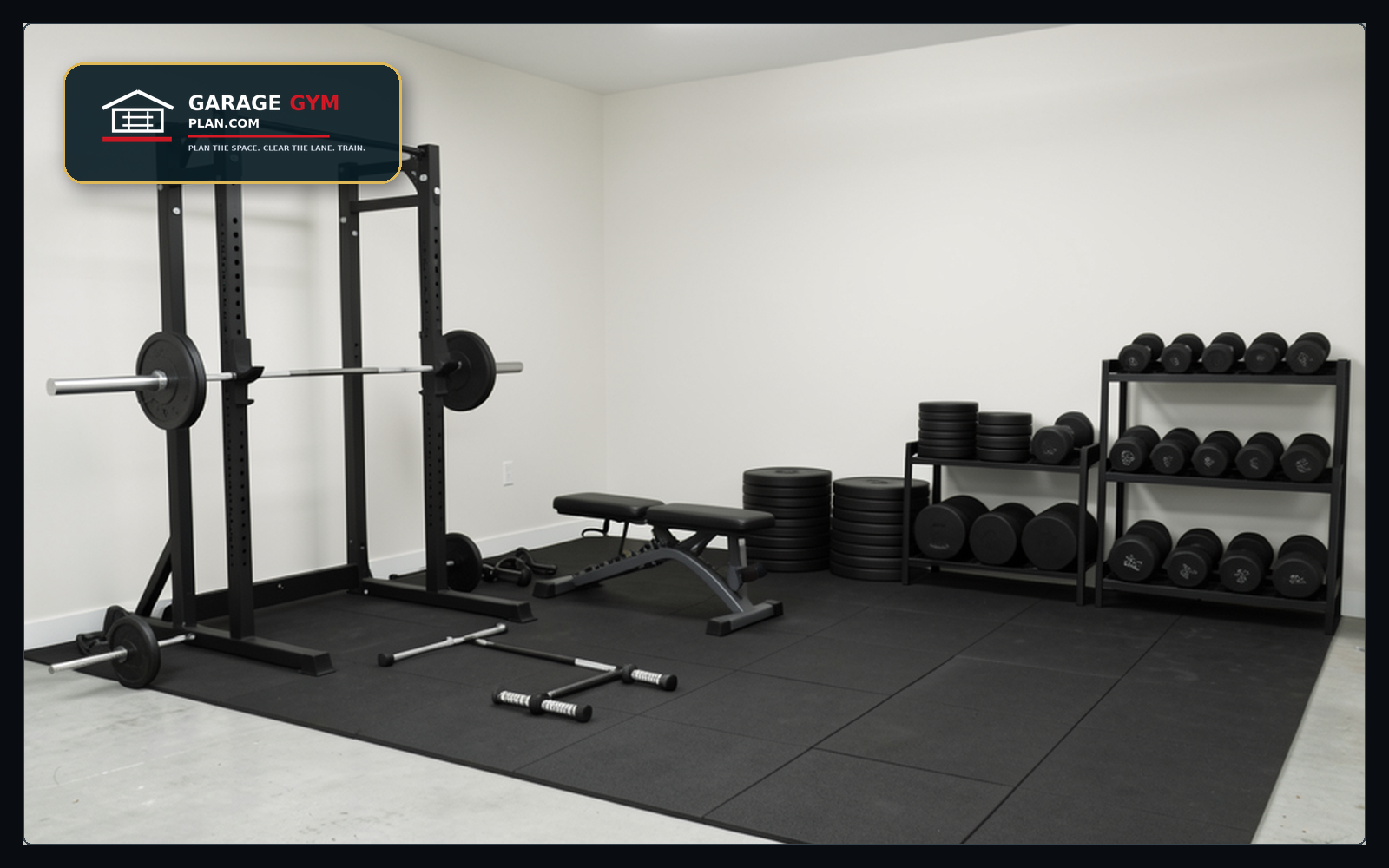
Use this guide if
- You are shopping before your garage is mapped
- You want to avoid returns, cramped workouts, or equipment that never gets used
- You need a simple pre-purchase checklist
The planning sequence
- Step 1: Measure the real usable space, not just the garage dimensions
- Step 2: Pick the training lane before browsing equipment packages
- Step 3: Check ceiling, door, and opener conflicts for tall equipment
- Step 4: Plan storage and flooring at the same time as the rack
- Step 5: Buy around your actual training week, not the most impressive setup photo
Common mistakes to avoid
- Copying someone else’s layout without matching their garage constraints
- Ignoring accessory clutter because the big equipment fits
- Buying cheap storage that creates a daily workout barrier
What to compare before you buy
Every major buy should answer four questions: where it arrives, where it is assembled, where it is used, and where it lives between workouts.
| Product path | Use it when | Check before ordering | Compare |
|---|---|---|---|
| Measuring Tape And Floor Tape | Best when it solves ordering gear before measuring the route, ceiling, training lane, and storage plan without crowding the training lane. | Verify size, mounting/support, capacity language, and return rules on the current product page. | Plan first |
| Starter Storage Hooks | Best when it solves ordering gear before measuring the route, ceiling, training lane, and storage plan without crowding the training lane. | Verify size, mounting/support, capacity language, and return rules on the current product page. | View options |
| Equipment Mat Options | Best when it solves ordering gear before measuring the route, ceiling, training lane, and storage plan without crowding the training lane. | Verify size, mounting/support, capacity language, and return rules on the current product page. | Plan first |
- Tape the footprint before ordering.
- Confirm delivery path, stairs, door width, and garage threshold.
- Check current dimensions, assembly instructions, warranty, and return window.
Garage Gym Plan may earn from qualifying retailer links. Search links are starting points, not final endorsements; verify the current product specs and installation instructions before buying.
Garage Gym Reset Kit
Measure the garage, choose the storage path, and turn the plan into a printable checklist before buying more equipment.
See the Garage Gym Reset KitTrust check for this decision
The safest choice is the one that fits your measured room and the manufacturer’s current installation requirements. Do not rely on a category name alone. Match the product dimensions to your rack zone, wall structure, walking lane, and storage reset routine.
Before checkout, compare the product page against your garage notes: clearance, mounting surface, weight capacity language, included hardware, delivery weight, and return window. If any of those details are unclear, choose the more conservative option or keep planning with the Garage Gym Reset Kit.
Next pages to plan with this
Use these guides to connect the layout decision to measurement, storage, flooring, and buying order.
How to use this buying mistakes page
Start with the real room: measure the space, mark the training lane, then choose the setup changes that make the next workout easier. For this topic, the useful signals are space measurement, training priorities, storage, safety, and budget order. Focus on details that change what to buy, measure, move, install, or avoid.
The practical standard is simple: know what to buy first, what to delay, what to measure twice, and what could create a safety or reset problem. That keeps the plan useful without turning it into a stuffed list of every possible product or keyword variation.
Decision checks before buying
| Check | Why it matters | What to do | Compare |
|---|---|---|---|
| Measure the real usable area | Garage walls, door tracks, slopes, cars, shelves, and stored items shrink the room. | Use tape on the floor and leave the walking lane visible. | View options |
| Match the choice to training style | A lifter, a circuit user, and a family gym need different defaults. | Pick the setup that protects the main workout instead of the setup with the most features. | Plan first |
| Plan the reset | Messy rooms become harder to train in and harder to evaluate later. | Give each item a home that can be reached after a tired session. | Plan first |
| Check safety and maintenance | Bolts, wall mounts, rubber edges, cords, and clearance problems show up after use. | Recheck the setup after the first few workouts and after seasonal garage changes. | Plan first |
Good fit / bad fit examples
A good fit is a layout or product choice that makes the most common workout easier without adding daily friction. It keeps heavy items close to where they are used, preserves the walking lane, and makes cleanup obvious. In a small space, that usually means fewer large pieces and more careful placement. In a larger garage, it means avoiding the temptation to scatter equipment across every empty wall.
A bad fit usually looks impressive for a photo but fails during a normal week. It may block the car path, force plate changes into a narrow lane, put frequently used items behind rarely used items, or require a full room reset before every workout. Seeing those tradeoffs helps you avoid impressive-looking setups that make normal workouts harder.
What to test after setup
- Run one normal workout and note every time you step around equipment.
- Load and unload a bar or handle without moving unrelated items.
- Park the bench, plates, handles, mats, or accessories in their intended home.
- Open the garage door, vehicle door, cabinet, or storage bin that sits near the training area.
- Check whether the room can be reset in less than five minutes.
If those checks fail, the fix is usually layout order, not another product. Move the most-used pieces first, reduce duplicate storage, and keep the open training lane easier to see than the gear collection.
Use this as your baseline before buying
Use this section to set a simple baseline before spending money: compare the table, note the biggest mistake to avoid, and choose the next physical move in the garage.
Add more detail only when it changes a real choice, such as a measurement, installation constraint, price range, product fit issue, safety limit, or before-and-after layout note.
Measurement and buying sanity checks
Use these numbers as planning checks, not as live product claims. Final purchases should be verified against the current listing and manufacturer instructions.
- Measure before product: Write down the exact wall width, depth, ceiling height, car-door swing, walking lane, and where the item will reset after a workout.
- Use price bands carefully: Treat price ranges as planning estimates only. Verify current prices, shipping, dimensions, ratings, and return policies on the live listing.
- Keep the lane clear: The best-looking storage is a bad choice if it creates a toe-stub, blocks the car, hides daily gear, or requires moving three items before training.